
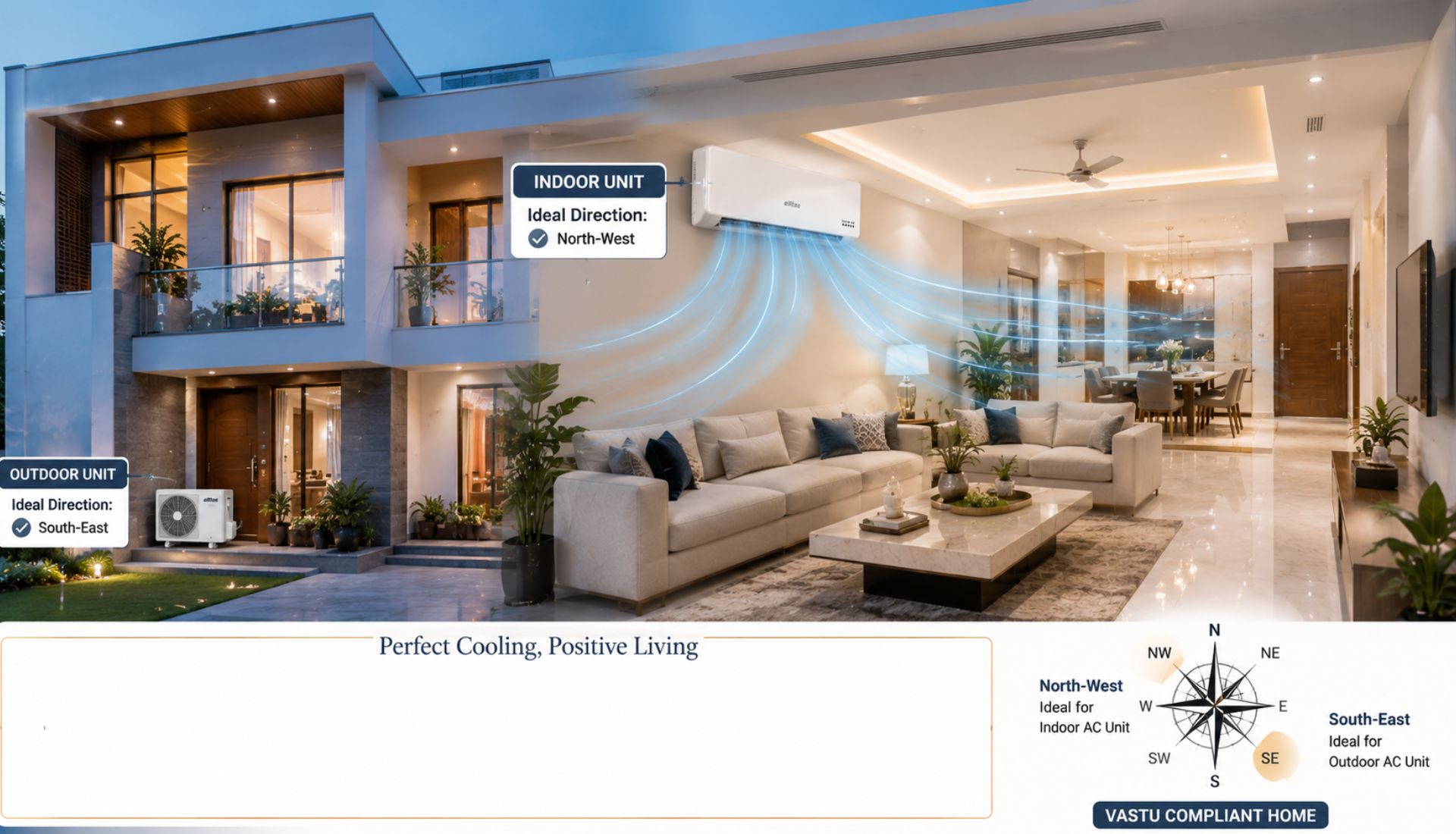
 A split air conditioner consists of two main components: the indoor unit and the outdoor condenser unit. While most homeowners focus on selecting the right AC capacity and energy rating, the placement of both units plays a major role in cooling efficiency, system lifespan, and overall comfort.
For homeowners who follow Vastu Shastra, the installation location is also an important consideration. Traditional Vastu principles suggest that the direction and positioning of electrical appliances may contribute to a balanced and harmonious living environment.
This guide explains the ideal placement for both the indoor and outdoor units of a split AC according to commonly followed Vastu recommendations, while also covering practical installation tips that improve cooling performance.
At Elitas Appliances, we combine modern cooling innovation with thoughtful Vastu-inspired design through our premium Vastu Series Air Conditioners.
Understanding a Split Air Conditioner
Before discussing Vastu placement, it is important to understand how a split air conditioner works.
- Indoor Unit – Delivers cool air into the room.
- Outdoor Unit – Houses the compressor and condenser, releasing heat absorbed from inside.
Both units work together through refrigerant pipes and electrical connections. Proper positioning of each unit ensures efficient heat transfer, quieter operation, and lower electricity consumption.
Why Proper Placement Matters
Correct placement affects more than aesthetics. It directly influences:
- Cooling efficiency
- Airflow distribution
- Energy consumption
- Compressor performance
- Maintenance accessibility
- Noise levels
- Overall lifespan of the air conditioner
From a Vastu perspective, selecting suitable directions for electrical appliances is believed to support positive energy flow within the home.
Best Direction for the Indoor Unit According to Vastu
South-East Wall
The South-East direction is traditionally associated with the Fire element and is widely considered one of the preferred locations for electrical appliances.
Installing the indoor split AC unit on the South-East wall allows cool air to spread across the room while aligning with common Vastu recommendations.
Benefits
- Supports traditional Vastu principles
- Promotes even airflow
- Suitable for most modern home layouts
- Easy integration with interior design
North-West Wall
The North-West direction is another commonly recommended option for indoor AC installation. This direction is associated with movement and airflow, making it suitable for distributing cool air throughout living spaces.
It works especially well in larger living rooms and open-plan homes where balanced airflow is essential.
Indoor Unit Locations to Avoid
North-East Corner
Many Vastu consultants recommend keeping the North-East corner open, clean, and free from heavy electrical equipment. Installing an indoor AC unit in this area is generally discouraged.
Directly Above the Bed or Sofa
Although not specifically a Vastu rule, placing the indoor unit directly above seating or sleeping areas can result in cold air blowing continuously onto occupants, reducing comfort.
Ideal Height for the Indoor Unit
For effective cooling and unrestricted airflow:
- Install the indoor unit approximately 7–8 feet above the floor.
- Leave adequate clearance above and beside the unit.
- Avoid placing decorative panels or cabinets that block airflow.
- Ensure the airflow reaches the center of the room.
Proper installation height improves both cooling performance and energy efficiency.
Best Direction for the Outdoor Unit According to Vastu
The outdoor condenser unit also plays an important role in system efficiency. Since it generates heat during operation, selecting a suitable location is essential.
According to commonly followed Vastu recommendations, the South, South-East, or North-West areas are generally considered suitable for placing outdoor electrical equipment, provided there is adequate ventilation and the installation complies with the manufacturer’s guidelines.
The outdoor unit should always have sufficient open space around it to allow heat to dissipate efficiently and to facilitate regular maintenance.
Factors to Consider for Outdoor Unit Placement
- Good ventilation
- Protection from excessive direct sunlight where possible
- Strong mounting surface
- Easy access for servicing
- Proper drainage for condensate water
- Minimal obstruction around the condenser
A well-positioned outdoor unit helps maintain efficient compressor operation and can contribute to lower energy consumption over time.
Indoor Unit vs Outdoor Unit Placement: Key Differences
Although both the indoor and outdoor units are part of the same air conditioning system, they perform different functions and therefore require different installation considerations. The indoor unit is responsible for distributing cool air inside the room, while the outdoor unit releases the heat extracted from indoors.
| Feature | Indoor Unit | Outdoor Unit |
|---|---|---|
| Primary Function | Delivers cool air indoors | Releases heat outdoors |
| Preferred Vastu Directions | South-East or North-West | South, South-East, or North-West |
| Installation Height | 7–8 feet above the floor | Raised platform or secure wall bracket |
| Main Requirement | Unobstructed airflow | Good ventilation and heat dissipation |
| Maintenance Access | Easy filter cleaning | Accessible for servicing and repairs |
Common Split AC Placement Mistakes to Avoid
Even a high-quality split AC may not deliver its best performance if either unit is installed incorrectly. Avoid these common mistakes:
- Installing the indoor unit directly above a bed, sofa, or dining table.
- Mounting the indoor unit behind curtains or decorative panels that block airflow.
- Installing the outdoor unit in a completely enclosed area with poor ventilation.
- Placing the outdoor unit where it receives intense sunlight all day without protection.
- Ignoring the recommended distance between the indoor and outdoor units.
- Installing the outdoor unit near bedrooms where compressor noise may disturb occupants.
- Failing to provide proper drainage for condensate water.
Following the manufacturer’s installation instructions is just as important as considering Vastu principles.
Practical Installation Tips for Better Cooling
To maximize comfort and efficiency, combine Vastu-conscious planning with modern installation best practices:
- Choose the correct AC capacity for your room size.
- Use high-quality insulated copper piping.
- Seal all wall openings after installation to prevent air leakage.
- Ensure the outdoor unit has at least the minimum clearance recommended by the manufacturer.
- Keep the condenser free from leaves, dust, and debris.
- Clean indoor air filters every few weeks during peak usage.
- Schedule professional servicing at least once a year.
These simple measures help improve cooling performance, reduce electricity consumption, and extend the life of your air conditioner.
Benefits of Proper Indoor and Outdoor Unit Placement
A well-planned installation provides advantages beyond aesthetics. Whether you follow Vastu principles or simply want the most efficient cooling, correct placement offers several practical benefits:
- More even cooling throughout the room.
- Lower energy consumption.
- Reduced strain on the compressor.
- Quieter operation.
- Improved indoor comfort.
- Longer equipment lifespan.
- Easier servicing and maintenance.
- Better integration with your home’s interior and exterior design.
Why Choose the Elitas Vastu Series Air Conditioner?
At Elitas Appliances, we understand that many homeowners want advanced cooling technology while respecting traditional design preferences. Our Vastu Series Air Conditioners are developed to complement Vastu-conscious installation practices without compromising on performance.
Whether you are installing a new split AC or replacing an existing system, the Elitas Vastu Series offers reliable cooling, elegant design, and modern energy-efficient technology for Indian homes.
Explore our complete range of air conditioners:
https://elitasappliances.com/air-conditioners
Discover the Vastu Series:
Indoor and Outdoor Units: Working Together
A split air conditioner performs best when both the indoor and outdoor units are installed correctly. The indoor unit should distribute cool air efficiently, while the outdoor condenser must have enough ventilation to release heat effectively.
Ignoring either unit can reduce cooling efficiency, increase electricity consumption, and shorten the system’s lifespan. By combining professional installation with thoughtful room planning and, if desired, Vastu-inspired placement, homeowners can create a comfortable and energy-efficient living environment.
Conclusion
Choosing the right location for both the indoor and outdoor units of a split AC is one of the most important decisions during installation. According to commonly followed Vastu recommendations, the South-East and North-West are generally suitable for the indoor unit, while the South, South-East, or North-West are often preferred for the outdoor condenser, provided there is sufficient ventilation and the installation follows the manufacturer’s requirements.
It is equally important to select the correct AC capacity, ensure proper airflow, maintain adequate clearances, and schedule regular servicing. These practical factors have a direct impact on cooling performance and energy efficiency.
If you are looking for a premium cooling solution designed for modern Indian homes, explore the Elitas Vastu Series Air Conditioner. It combines innovative technology, elegant design, and Vastu-conscious installation preferences to deliver reliable comfort throughout the year.
Ready to Upgrade Your Home Cooling?
Visit Elitas Appliances to explore our complete range of premium air conditioners and discover how the Elitas Vastu Series can help you create a comfortable, energy-efficient, and thoughtfully planned home.
Frequently Asked Questions
1. Where should the indoor unit of a split AC be installed according to Vastu?
According to traditional Vastu Shastra, the South-East or North-West wall is generally considered suitable for installing the indoor unit of a split AC. These directions are commonly associated with electrical appliances and balanced airflow.
2. Where should the outdoor unit of a split AC be placed?
The outdoor condenser unit is generally recommended in the South, South-East, or North-West area, provided it has adequate ventilation, proper drainage, and follows the manufacturer’s installation guidelines.
3. Can the outdoor AC unit be installed in the North-East?
Many Vastu practitioners advise avoiding the North-East for heavy electrical equipment, including outdoor condenser units. If installation there is unavoidable due to structural limitations, prioritize safe installation, proper ventilation, and compliance with the manufacturer’s recommendations.
4. Does outdoor unit placement affect cooling performance?
Yes. Poor ventilation around the outdoor unit can reduce heat dissipation, increase compressor workload, lower cooling efficiency, and increase electricity consumption.
5. What is the ideal height for installing the indoor unit?
The indoor unit is generally installed 7–8 feet (2.1–2.4 meters) above the floor with sufficient clearance around the unit for unrestricted airflow.
6. Can I install the indoor unit directly above a bed or sofa?
It is generally not recommended because continuous cold airflow directly onto occupants may reduce comfort. Position the indoor unit so air circulates evenly throughout the room instead.
7. How much space should be left around the outdoor unit?
The required clearance varies by manufacturer and model. Always follow the installation manual to ensure adequate airflow, service access, and efficient heat dissipation.
8. Does following Vastu improve AC efficiency?
Vastu recommendations are based on traditional beliefs and cultural practices. Cooling efficiency depends on practical factors such as correct AC sizing, professional installation, insulation, airflow, and regular maintenance.
9. What are the benefits of the Elitas Vastu Series Air Conditioner?
The Elitas Vastu Series Air Conditioner combines modern cooling technology with installation options that complement Vastu-conscious home planning while delivering energy-efficient performance.
10. What is the most important factor when installing a split AC?
The most important factors include selecting the correct AC capacity, choosing a location with proper airflow and ventilation, maintaining manufacturer-recommended clearances, and ensuring professional installation. Vastu preferences can be incorporated alongside these practical considerations.