
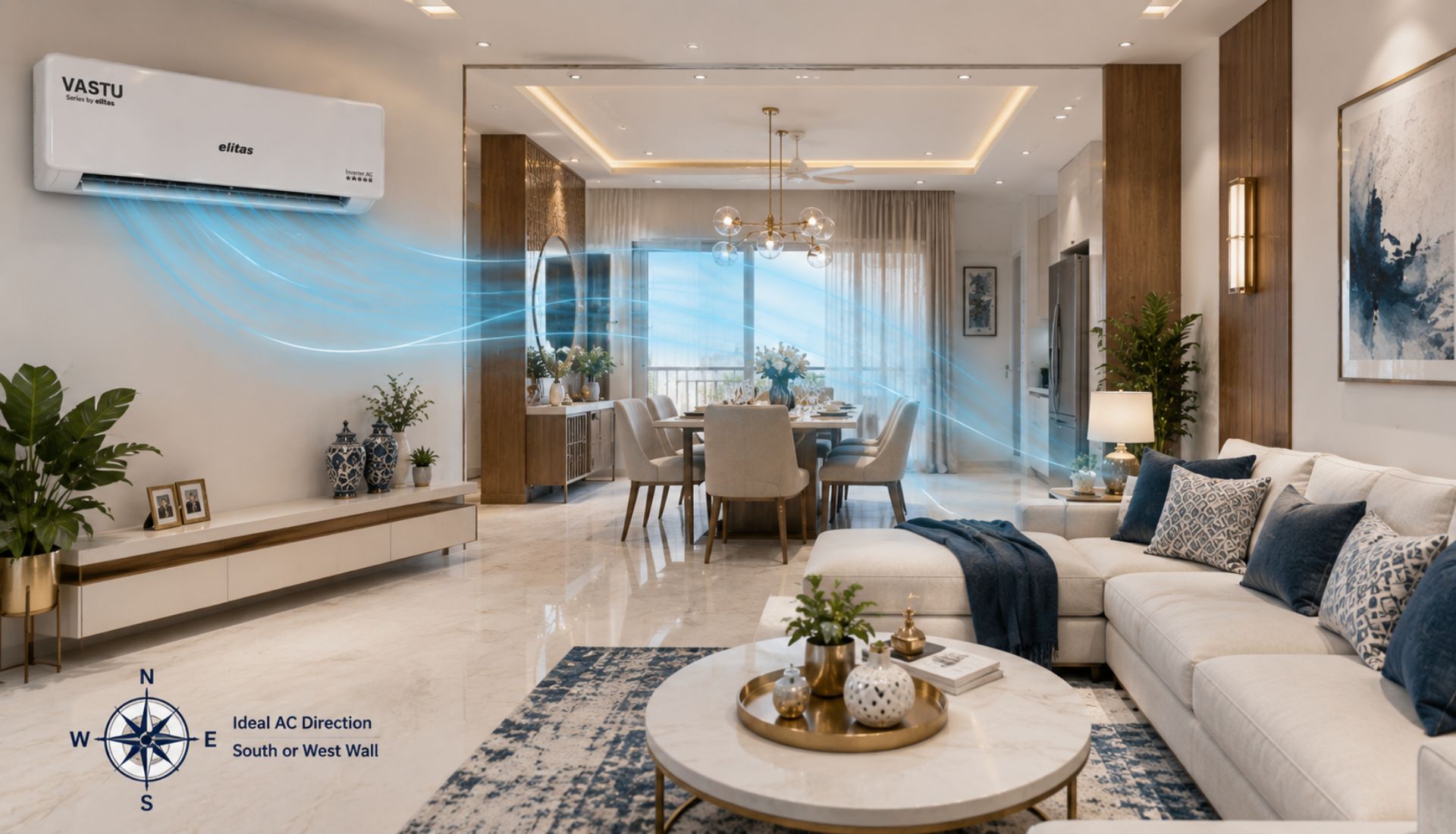
Modern homes often feature spacious open halls that combine the living room, dining area, and kitchen into one large space. These layouts create a bright, comfortable, and welcoming environment. However, cooling such a large area efficiently requires careful planning. According to Vastu Shastra, the placement of your air conditioner not only affects cooling performance but may also influence the balance and positive energy within your home.
Choosing the right AC position helps distribute cool air evenly while supporting a harmonious indoor environment. Whether you are building a new home or renovating an existing one, understanding Vastu recommendations can help you make informed decisions.
At Elitas Appliances, we combine modern cooling technology with traditional Vastu-inspired principles through our innovative Vastu Series Air Conditioners. These products are designed to help homeowners enjoy efficient cooling while following preferred Vastu guidelines.
Why AC Placement Matters in an Open Hall
Unlike a standard bedroom, an open hall usually covers multiple functional spaces. The airflow needs to travel across seating areas, dining tables, hallways, and sometimes even open kitchens.
Improper AC placement can create several problems:
- Uneven cooling
- Higher electricity bills
- Hot and cold spots
- Direct airflow onto people
- Reduced comfort
- Poor energy circulation according to Vastu
Proper placement allows the cool air to circulate naturally throughout the entire room while reducing stress on the air conditioner.
What Does Vastu Shastra Say About Air Conditioner Placement?
Vastu Shastra focuses on balancing the five natural elements—Earth, Water, Fire, Air, and Space. Every direction in a home is believed to represent specific energies. Installing electrical appliances in suitable locations helps maintain this balance.
Since an air conditioner combines electricity, airflow, and temperature control, selecting the appropriate wall becomes an important part of Vastu planning.
Although Vastu principles are based on traditional beliefs rather than scientific evidence, many homeowners choose to incorporate them into their home design for cultural and personal reasons.
Best Direction for Installing an AC in an Open Hall
1. South-East Wall
The South-East direction is generally considered one of the preferred locations for electrical appliances because it is associated with the Fire element.
Installing a split AC on the South-East wall allows the electrical component of the appliance to align with this traditional recommendation while providing effective airflow across the open hall.
Benefits
- Supports Vastu recommendations
- Excellent airflow coverage
- Suitable for modern open layouts
- Easy installation in many homes
2. North-West Wall
Another commonly recommended location is the North-West wall. This direction is connected with movement and air circulation, making it suitable for cooling larger spaces.
When installed correctly, the airflow spreads naturally without concentrating cold air directly on occupants.
Directions to Avoid
North-East Corner
Many Vastu experts recommend keeping the North-East corner light, clean, and free from heavy electrical equipment. Installing a large indoor AC unit here is generally discouraged.
South-West Corner
The South-West direction represents stability according to Vastu principles. Heavy electrical appliances mounted high on this wall may not align with traditional recommendations.
If installation in these locations cannot be avoided because of structural limitations, professional planning can often reduce airflow issues while maintaining cooling efficiency.
Ideal Height for an Open Hall Split AC
Height is just as important as direction.
For the best cooling performance:
- Install the indoor unit approximately 7–8 feet above the floor.
- Leave enough clearance around the unit for unrestricted airflow.
- Avoid placing the AC directly above seating where cold air blows continuously onto people.
- Ensure there are no beams or obstructions blocking the airflow.
These installation practices improve both comfort and energy efficiency, especially in large living spaces.
How Airflow Should Move Across an Open Hall
An ideal installation allows cool air to spread evenly across the room instead of concentrating in one corner. The airflow should move naturally through the seating area, dining space, and connected zones without creating uncomfortable drafts.
When planning your installation, consider furniture placement, windows, doors, ceiling height, and natural ventilation. These factors play an important role in achieving consistent cooling throughout the open hall.
Homeowners looking for a Vastu-inspired cooling solution can explore the Elitas Vastu Series Air Conditioner, which is designed to complement modern interiors while supporting Vastu-conscious installation preferences.
Common AC Placement Mistakes in Open Hall Living Spaces
Many homeowners focus only on the appearance of their interiors and overlook the importance of proper AC placement. While a stylish installation may look attractive, incorrect positioning can reduce cooling efficiency, increase electricity consumption, and create uncomfortable airflow. From a Vastu perspective, the wrong placement may also disturb the desired balance of energy within the home.
Here are some of the most common mistakes to avoid:
- Installing the AC directly above the main sofa. Continuous cold air blowing onto people can cause discomfort and may lead to health issues such as headaches or muscle stiffness.
- Mounting the indoor unit too close to the ceiling. This restricts airflow and makes the AC work harder to cool the room.
- Placing the AC opposite large glass windows. Direct sunlight increases heat gain, forcing the air conditioner to consume more energy.
- Ignoring room layout. Furniture, partitions, or decorative panels can block airflow and create uneven cooling.
- Choosing the wrong wall. According to Vastu principles, avoiding the North-East for heavy electrical appliances is generally recommended.
Planning the installation before interior work begins helps achieve better cooling performance and creates a cleaner, more balanced living space.
Tips for Better Cooling in Large Open Halls
Open-concept homes require more thoughtful cooling than standard rooms. Along with choosing the right Vastu direction, these practical tips can significantly improve comfort and energy efficiency.
- Select the correct AC capacity based on the total area of the open hall.
- Close unnecessary openings during peak summer to prevent cool air from escaping.
- Use ceiling fans to circulate conditioned air more evenly.
- Keep air filters clean for maximum airflow and efficiency.
- Seal gaps around doors and windows to reduce heat infiltration.
- Choose inverter technology for consistent cooling and lower electricity bills.
- Schedule regular maintenance to keep the AC operating at peak performance.
These simple practices help maintain a comfortable indoor temperature while reducing energy consumption throughout the year.
Choosing the Right AC Capacity for an Open Hall
Even the best Vastu-compliant placement cannot compensate for an incorrectly sized air conditioner. An undersized AC will struggle to cool the space, while an oversized unit may cycle on and off frequently, reducing efficiency and comfort.
Although the ideal capacity depends on room size, ceiling height, insulation, and local climate, the following serves as a general guideline:
| Open Hall Size | Recommended AC Capacity |
|---|---|
| Up to 180 sq. ft. | 1.5 Ton |
| 180–300 sq. ft. | 2 Ton |
| 300+ sq. ft. | Multiple Indoor Units or Higher Capacity System |
Consulting an experienced AC professional ensures you select the right system for your home’s layout and cooling requirements.
Why Choose the Elitas Vastu Series Air Conditioner?
At Elitas Appliances, we understand that many Indian homeowners want modern technology while respecting traditional Vastu principles. Our Vastu Series Air Conditioners are developed to support both efficient cooling and thoughtful installation planning.
Whether you are designing a new home or upgrading your current living space, the Elitas Vastu Series offers an ideal combination of performance, comfort, and elegant design.
Explore our latest collection here:
Browse Elitas Air Conditioners
Or discover our dedicated Vastu collection:
Explore the Elitas Vastu Series Air Conditioner
Benefits of Following Vastu for AC Placement
While Vastu Shastra is based on traditional Indian architectural principles and cultural beliefs rather than scientific evidence, many homeowners choose to follow these recommendations to create a harmonious living environment.
Some commonly perceived benefits include:
- Balanced airflow throughout the home
- Comfortable indoor temperatures
- Improved space planning
- Reduced airflow obstruction
- Better integration with interior design
- Peaceful and organized living spaces
- Enhanced overall home comfort
When combined with proper AC sizing, professional installation, and regular maintenance, thoughtful placement contributes to an efficient and enjoyable cooling experience.
Conclusion
Finding the ideal AC position for an open hall living space is about more than simply choosing an empty wall. A carefully planned installation improves airflow, enhances cooling efficiency, reduces energy consumption, and creates a comfortable environment for family and guests.
According to traditional Vastu recommendations, the South-East and North-West walls are generally considered suitable locations for split air conditioners, while proper installation height and unobstructed airflow remain equally important.
If you’re looking for a cooling solution that combines modern technology with Vastu-inspired design, explore the complete range of Elitas Air Conditioners and the innovative Elitas Vastu Series. Our products are designed to help you enjoy reliable cooling while complementing your home’s architecture and lifestyle.
Ready to Upgrade Your Home Cooling?
Visit Elitas Appliances today to discover premium air conditioners designed for Indian homes. Whether you are planning a new installation or replacing an existing system, our team can help you choose the ideal solution for your living space.
Frequently Asked Questions
1. What is the ideal AC position for an open hall according to Vastu?
According to traditional Vastu Shastra, the South-East and North-West walls are generally considered suitable for installing a split air conditioner. These directions are believed to support balanced airflow and appropriate placement of electrical appliances. Practical considerations such as room layout and airflow should also be taken into account.
2. Can I install an AC in the North-East corner?
Many Vastu practitioners recommend avoiding the North-East corner for heavy electrical appliances, including air conditioners. If structural constraints make this unavoidable, consult a qualified AC installer to optimize cooling performance.
3. Which wall is best for a split AC in a living room?
The best wall is one that allows cool air to circulate evenly across the room without blowing directly onto people. In Vastu-based planning, the South-East or North-West walls are commonly preferred.
4. What is the ideal height to install a split AC?
The indoor unit is generally installed 7–8 feet (2.1–2.4 meters) above the floor, with sufficient clearance around the unit to ensure unrestricted airflow.
5. Does AC placement affect electricity consumption?
Yes. Poor placement can lead to uneven cooling, longer compressor run times, and higher electricity usage. Proper installation improves airflow and energy efficiency.
6. Which AC capacity is suitable for an open hall?
The right capacity depends on the room size, ceiling height, insulation, number of occupants, and local climate. As a general guideline:
- Up to 180 sq. ft. – 1.5 Ton
- 180–300 sq. ft. – 2 Ton
- Larger spaces may require multiple indoor units or a higher-capacity system.
7. Is the Elitas Vastu Series suitable for modern homes?
Yes. The Elitas Vastu Series Air Conditioner is designed to combine modern cooling technology with installation options that align with Vastu-conscious home planning.
8. Should the outdoor unit also follow Vastu?
Some Vastu consultants recommend considering the placement of the outdoor unit as well. However, it should also meet manufacturer guidelines for ventilation, accessibility, and safe installation.
9. Can furniture affect AC cooling?
Yes. Large furniture, partitions, or decorative panels can block airflow and reduce cooling efficiency. Plan the room layout to allow air to circulate freely.
10. Does Vastu-compliant AC placement guarantee better cooling?
No. Cooling performance primarily depends on correct AC sizing, installation quality, insulation, maintenance, and room conditions. Vastu recommendations are based on traditional beliefs and are often followed for cultural or personal reasons rather than proven scientific effects.