
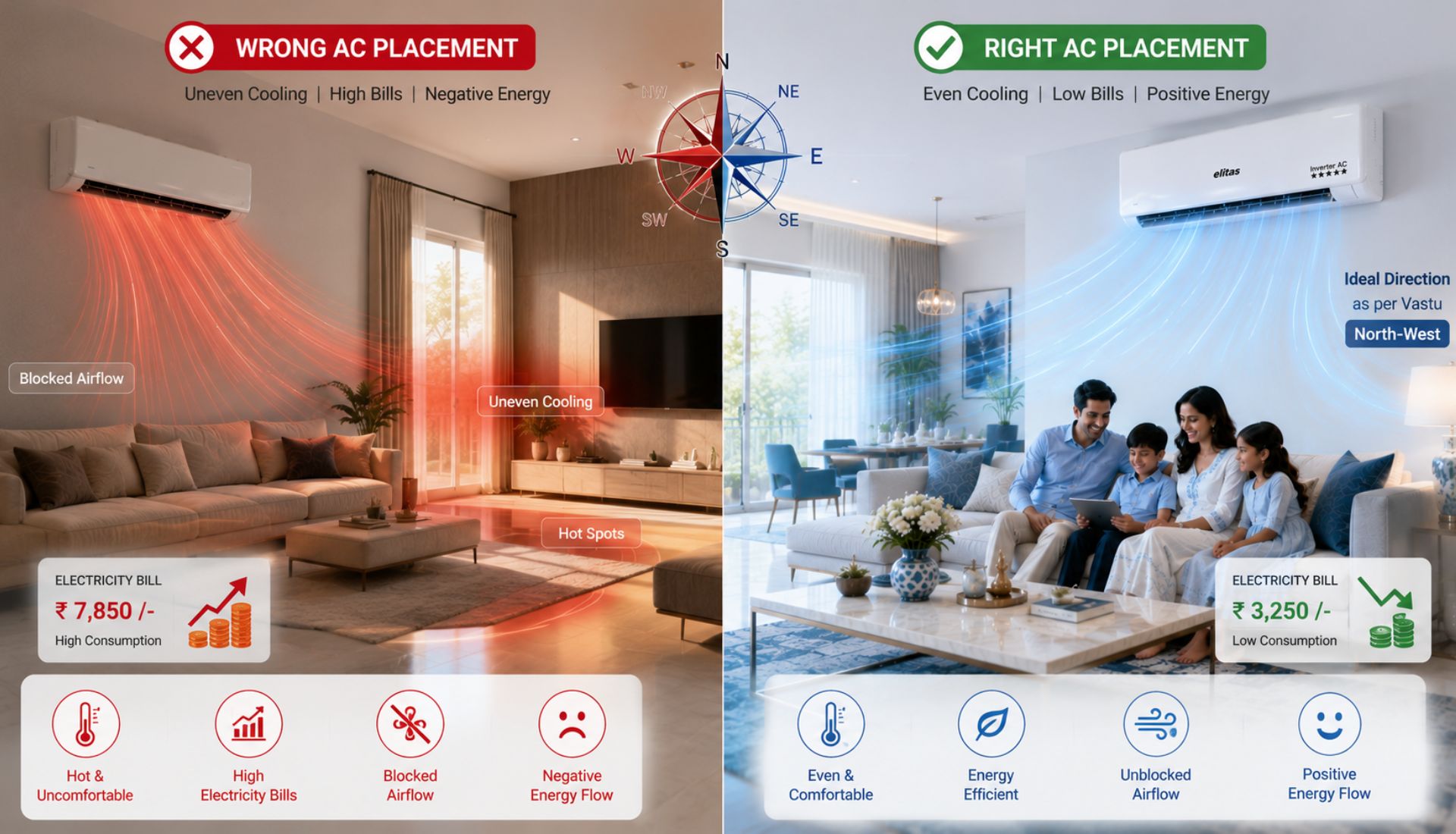
 Buying an energy-efficient air conditioner is only one part of achieving comfortable cooling. The location of the indoor and outdoor units also plays a major role in how effectively your AC performs. Even a premium inverter AC may struggle to cool your home properly if it is installed in the wrong place.
Many homeowners also consider Vastu Shastra when planning AC installation. While Vastu recommendations are based on traditional beliefs rather than scientific evidence, they are an important part of home planning for many Indian families. Combining practical installation principles with Vastu-conscious planning can help create a comfortable and well-organized living environment.
In this guide, we explain the most common cooling problems caused by incorrect AC placement, how to avoid them, and practical tips for improving airflow, energy efficiency, and indoor comfort.
At Elitas Appliances, we provide innovative cooling solutions, including our Vastu Series Air Conditioners, designed to support modern homes with efficient cooling and thoughtful installation options.
Why AC Placement Matters
The location of an air conditioner affects much more than appearance. Proper placement allows cool air to circulate evenly, reduces unnecessary strain on the compressor, and improves overall comfort.
Correct placement helps:
- Improve airflow.
- Maintain even room temperature.
- Reduce hot and cold spots.
- Support energy-efficient operation.
- Improve indoor comfort.
- Extend the lifespan of the AC.
Incorrect placement can create several problems that reduce the overall performance of your cooling system.
Problem 1: Uneven Cooling
One of the most common signs of poor AC placement is uneven cooling. Some areas of the room feel very cold while others remain warm.
This often happens when:
- The indoor unit is installed too close to one corner.
- Furniture blocks the airflow.
- The vents are pointed in the wrong direction.
- The room layout restricts air circulation.
Solution:
- Install the indoor unit where airflow can reach the entire room.
- Use swing mode for better air distribution.
- Keep the area below the AC free from large obstacles.
Problem 2: Higher Electricity Bills
Poor AC placement can force the system to run longer because the room takes more time to cool. This may increase electricity consumption over time.
Examples include:
- Installing the indoor unit where it receives direct sunlight.
- Poor outdoor unit ventilation.
- Restricted airflow.
- Incorrect AC size for the room.
Solution:
- Install the indoor unit away from direct heat sources.
- Ensure proper ventilation around the outdoor unit.
- Select the correct AC capacity.
- Clean filters regularly.
Problem 3: Direct Cold Air on Occupants
An AC installed directly above a bed, sofa, or workstation may blow cold air continuously onto people. While some users enjoy strong airflow, others may find it uncomfortable during long periods of use.
Solution:
- Adjust the airflow slightly upward.
- Use automatic swing mode.
- Avoid placing seating areas directly below the indoor unit whenever possible.
Problem 4: Poor Air Circulation
Air circulation is essential for consistent cooling. If airflow is blocked by cupboards, curtains, partitions, or decorative items, the room may not cool evenly.
Signs of poor air circulation include:
- Warm corners.
- Inconsistent room temperature.
- Longer cooling time.
- Reduced comfort.
Solution:
- Maintain a clear airflow path.
- Keep furniture away from the AC vents.
- Use ceiling fans to improve air movement in large rooms.
Problem 5: Outdoor Unit Overheating
The outdoor unit releases heat collected from inside your home. If it is installed in a poorly ventilated location or surrounded by obstructions, heat may not dissipate efficiently.
Potential issues include:
- Reduced cooling efficiency.
- Higher compressor workload.
- Increased electricity consumption.
- Potential reduction in equipment lifespan.
Solution:
- Provide adequate clearance around the outdoor unit.
- Follow the manufacturer’s recommended installation distances.
- Keep the outdoor unit clean and free from debris.
AC Placement According to Traditional Vastu
Many homeowners prefer to install air conditioners according to Vastu Shastra. Traditional recommendations commonly suggest the South-East or North-West directions for electrical appliances, where practical.
Regardless of Vastu preferences, safety, structural requirements, proper airflow, and manufacturer installation guidelines should always remain the highest priority.
Problem 6: Hot and Cold Spots in the Room
If one side of the room feels cool while the other side remains warm, your AC may not be distributing air evenly. This problem is common in rooms with poor indoor unit placement or blocked airflow.
Common causes include:
- Indoor unit installed too close to one wall.
- Furniture blocking airflow.
- Improper vent direction.
- Large open rooms without sufficient air circulation.
Solution:
- Use automatic swing mode.
- Adjust vents slightly upward for wider air circulation.
- Keep the airflow path clear.
- Use ceiling fans to assist cooling in larger rooms.
Problem 7: AC Runs Continuously Without Cooling Properly
If your air conditioner keeps running but the room never reaches the desired temperature, poor placement could be one of the reasons. The system may have to work harder because cool air is not circulating efficiently.
Other possible reasons include:
- Incorrect AC capacity.
- Dirty air filters.
- Open doors or windows.
- Poor insulation.
- Direct sunlight heating the room.
Solution:
- Close doors and windows while the AC is running.
- Use curtains or blinds to reduce heat gain.
- Clean filters regularly.
- Ensure the AC is correctly sized for the room.
Problem 8: Reduced Indoor Comfort
An incorrectly positioned air conditioner may create uncomfortable airflow, excessive noise, or uneven temperatures. This can affect relaxation, sleep, and productivity.
For example:
- Cold air blowing directly onto the bed.
- Continuous airflow toward a work desk.
- Uneven cooling across seating areas.
Solution:
- Position the indoor unit to distribute air evenly.
- Adjust airflow using swing mode.
- Maintain a comfortable temperature between 24°C and 26°C.
Smart AC Features That Help Improve Cooling
Modern inverter air conditioners include intelligent features that help optimize cooling, even when room conditions change.
Useful smart features include:
- Automatic vertical and horizontal swing.
- Inverter compressor technology.
- Eco Mode for improved energy efficiency.
- Sleep Mode for comfortable night cooling.
- Wi-Fi and app-based controls.
- AI-assisted cooling (available on selected models).
- Energy monitoring features.
These features work best when combined with proper installation and regular maintenance.
Benefits of Correct AC Placement
Installing your AC in the right location offers several advantages:
- Even cooling throughout the room.
- Better airflow and air circulation.
- Lower electricity consumption.
- Reduced compressor workload.
- Improved indoor comfort.
- Faster cooling.
- Longer equipment lifespan.
- Better overall user experience.
Why Choose the Elitas Vastu Series Air Conditioner?
At Elitas Appliances, we understand that proper installation is just as important as choosing the right air conditioner. Our Elitas Vastu Series Air Conditioners combine modern inverter technology with installation options that support Vastu-conscious home planning.
Key benefits include:
- Energy-efficient inverter technology.
- Reliable cooling performance.
- Modern and elegant design.
- Suitable for Vastu-conscious installation planning.
- Quiet operation.
- Designed for Indian climate conditions.
Explore our complete range of air conditioners:
https://elitasappliances.com/air-conditioners
Learn more about the Elitas Vastu Series:
Conclusion
Incorrect AC placement can reduce cooling performance, increase electricity consumption, and make your home less comfortable. Problems such as uneven cooling, blocked airflow, hot spots, and unnecessary compressor operation are often linked to poor installation decisions.
By selecting the correct installation location, maintaining clear airflow, cleaning filters regularly, and following manufacturer recommendations, you can maximize your air conditioner’s efficiency and lifespan.
If you also follow Vastu Shastra, traditional placement suggestions can be incorporated alongside practical HVAC design and professional installation advice. Since Vastu recommendations are based on traditional beliefs rather than scientific evidence, they should complement—not replace—safe and effective installation practices.
Experience Better Cooling with Elitas Appliances
Visit Elitas Appliances to explore our premium range of inverter air conditioners. Discover how the Elitas Vastu Series Air Conditioner combines modern cooling technology, energy efficiency, and Vastu-conscious installation options to provide lasting comfort for Indian homes.
Frequently Asked Questions
1. Can wrong AC placement reduce cooling performance?
Yes. Incorrect AC placement can block airflow, create uneven cooling, increase compressor workload, and make it difficult to maintain a comfortable room temperature.
2. What are the signs of poor AC placement?
Common signs include:
- Uneven cooling
- Hot and cold spots
- Higher electricity bills
- Continuous compressor operation
- Poor airflow
- Cold air blowing directly on people
- Longer cooling time
3. Does AC placement affect electricity consumption?
Yes. When an AC is installed in an unsuitable location, it may run longer to cool the room, which can increase electricity usage. Proper placement, correct sizing, and regular maintenance all contribute to better efficiency.
4. Where should a split AC be installed?
The indoor unit should generally be installed high on a wall with a clear airflow path, away from direct sunlight and large obstacles. Always follow the manufacturer’s installation guidelines.
5. Can furniture block AC airflow?
Yes. Large furniture, curtains, cabinets, or decorative items placed in front of the indoor unit can restrict airflow and reduce cooling performance.
6. Does outdoor unit placement matter?
Yes. The outdoor unit needs sufficient ventilation to release heat efficiently. Poor ventilation around the outdoor unit can reduce cooling efficiency and increase energy consumption.
7. What temperature is best for efficient cooling?
A thermostat setting between 24°C and 26°C is generally recommended for balancing comfort and energy efficiency.
8. Does AC placement matter according to Vastu?
According to traditional Vastu Shastra, many homeowners prefer installing electrical appliances in the South-East or North-West direction where practical. These recommendations are traditional beliefs and should be considered alongside professional installation requirements.
9. How can I improve AC airflow?
You can improve airflow by:
- Keeping vents unobstructed
- Using swing mode
- Cleaning filters regularly
- Closing doors and windows while the AC is running
- Using ceiling fans in larger rooms
10. Why choose the Elitas Vastu Series Air Conditioner?
The Elitas Vastu Series Air Conditioner combines inverter technology, energy-efficient cooling, modern features, and installation options that support Vastu-conscious home planning for enhanced comfort.