
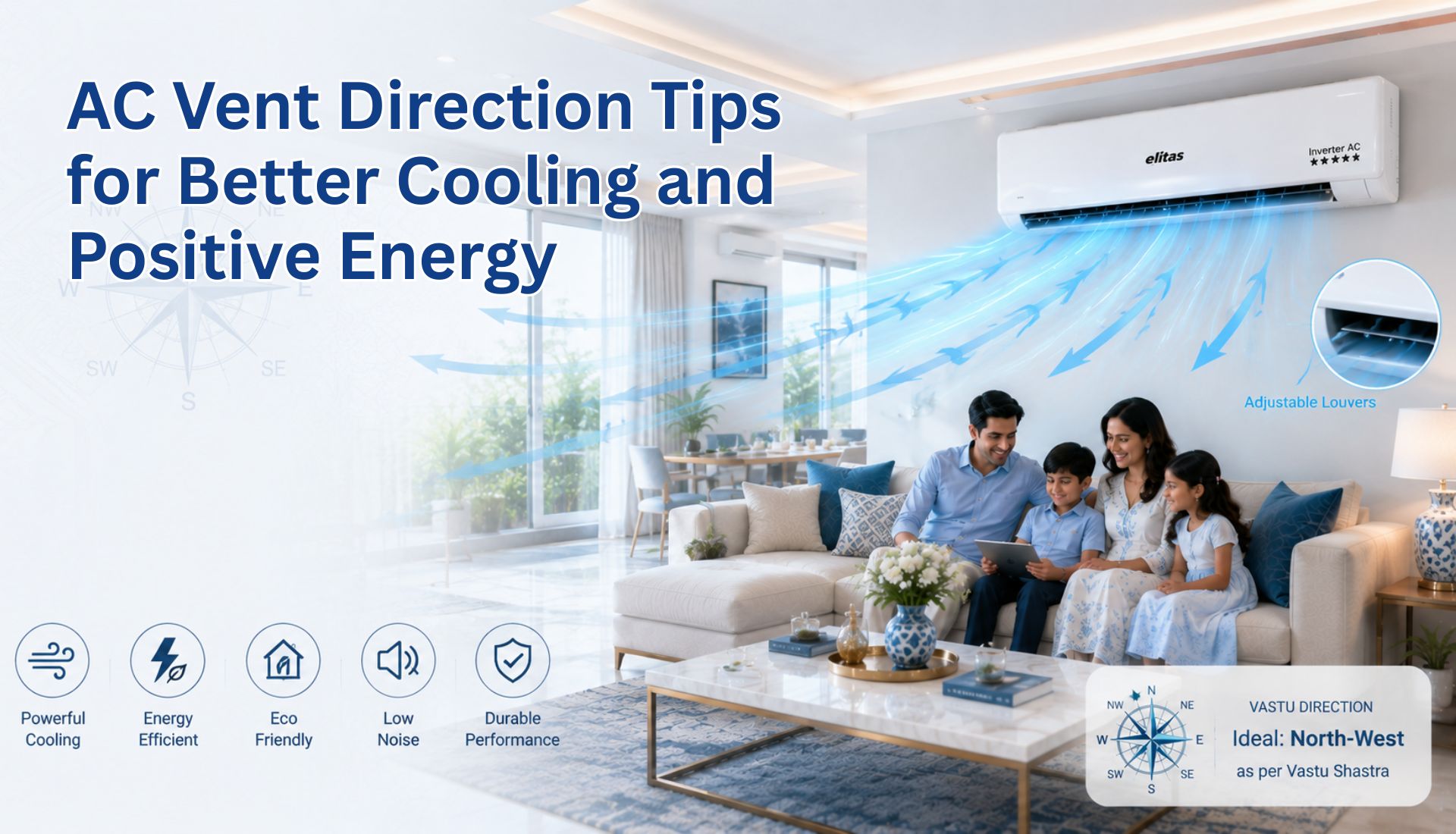
Many homeowners focus on buying an energy-efficient air conditioner but overlook one simple factor that can make a noticeable difference—the direction of the AC vents. Proper vent direction helps cool air spread evenly throughout the room, improves comfort, and can reduce unnecessary strain on the air conditioner.
In many Indian homes, people also consider Vastu Shastra while installing and using air conditioners. According to traditional Vastu beliefs, balanced airflow and proper placement contribute to a comfortable and harmonious living environment. While these recommendations are based on traditional practices rather than scientific evidence, they remain an important consideration for many families.
This guide explains how to adjust your AC vents for better cooling, improve energy efficiency, and understand commonly followed Vastu recommendations while always following the manufacturer’s installation instructions.
At Elitas Appliances, we offer innovative cooling solutions, including our Vastu Series Air Conditioners, designed for modern homes that value efficient cooling and thoughtful home planning.
Why AC Vent Direction Matters
Air conditioners cool your room by circulating conditioned air. If the vents are pointed in the wrong direction, cool air may remain concentrated in one area while other parts of the room stay warm.
Correct vent direction helps:
- Distribute cool air more evenly.
- Improve indoor comfort.
- Reduce hot spots in the room.
- Support efficient cooling.
- Reduce unnecessary compressor operation.
- Improve overall airflow.
A well-directed airflow can also help your inverter AC maintain the desired temperature more efficiently.
Which Direction Should AC Vents Face?
For most wall-mounted split air conditioners, it is generally recommended to direct the airflow slightly upward or horizontally rather than straight downward. Cool air naturally sinks, so directing it upward first allows it to circulate more evenly throughout the room before gradually moving downward.
Benefits of upward airflow include:
- Better air circulation.
- More even room temperature.
- Improved cooling coverage.
- Greater comfort.
- Potential energy savings through more efficient air distribution.
Most modern split ACs include automatic swing functions that continuously adjust the airflow direction to improve circulation.
Use Swing Mode for Better Air Distribution
Swing Mode automatically moves the air vents up and down, and in some models left and right, to distribute cool air throughout the room.
Advantages include:
- Even cooling.
- Reduced temperature differences.
- Greater comfort for everyone in the room.
- Improved airflow without manual adjustment.
If your air conditioner includes multi-directional swing, using this feature can improve comfort in larger rooms.
Avoid Pointing Cold Air Directly at People
Although directing cool air toward a seating area may seem effective, continuous airflow blowing directly onto people can reduce comfort for some individuals.
Instead, aim the vents so that cool air circulates naturally throughout the room. This creates a more balanced indoor environment and helps maintain a consistent temperature.
How Vent Direction Supports Energy Efficiency
Correct airflow allows the room to cool more evenly, reducing the amount of time the compressor needs to work at higher capacity. While vent direction alone will not dramatically lower electricity consumption, it complements other energy-saving practices such as choosing the right AC capacity, cleaning filters regularly, and keeping doors and windows closed during operation.
For the best results:
- Use the recommended temperature setting of 24°C to 26°C.
- Keep vents free from obstructions.
- Clean air filters regularly.
- Use ceiling fans to improve air circulation if needed.
AC Vent Direction and Vastu
Many homeowners prefer to align AC installation with Vastu Shastra. According to traditional Vastu beliefs, air circulation contributes to a pleasant and balanced indoor environment.
Commonly followed Vastu suggestions include:
- Allow cool air to circulate freely throughout the room.
- Avoid blocking airflow with heavy furniture.
- Install the indoor unit in commonly preferred directions such as the South-East or North-West, where practical.
- Maintain a clean and uncluttered space around the air conditioner.
These traditional recommendations should be considered alongside practical installation requirements, safety, and the manufacturer’s guidelines.
Best Vent Settings for Different Rooms
Living Room
Use automatic swing mode to distribute cool air across the entire seating area. This is especially helpful in larger living spaces where people sit in different locations.
Bedroom
Adjust the vents slightly upward or away from the bed to avoid direct airflow during sleep while maintaining comfortable cooling throughout the room.
Home Office
Direct airflow above your workspace instead of directly at your desk. This helps maintain comfort during long working hours without continuous cold air blowing on you.
Best Vent Direction for Dining Rooms and Open Hall Living Spaces
Dining rooms and open hall living spaces usually have larger areas that require even airflow for comfortable cooling. In these spaces, proper vent direction becomes even more important.
For the best results:
- Enable automatic swing mode whenever possible.
- Direct airflow slightly upward to improve air circulation.
- Avoid pointing vents directly at the dining table or seating area.
- Keep the airflow path free from large furniture or partitions.
- Use ceiling fans to help distribute cool air in larger rooms.
These simple adjustments help maintain a comfortable temperature throughout the entire space while reducing uneven cooling.
Common AC Vent Direction Mistakes
Many homeowners unknowingly reduce their AC’s performance by using incorrect vent settings. Avoid these common mistakes to improve cooling efficiency.
- Pointing vents directly downward all the time. Cool air can accumulate in one area instead of circulating naturally.
- Blocking vents with curtains or furniture. Restricted airflow reduces cooling performance.
- Turning off swing mode permanently. Continuous airflow in one direction may create uneven room temperatures.
- Setting the temperature extremely low. This increases electricity consumption without cooling the room significantly faster.
- Ignoring filter cleaning. Dirty filters reduce airflow and make the AC work harder.
- Closing all interior doors. This can reduce natural air circulation in connected spaces.
Correcting these habits can improve comfort, support energy efficiency, and help extend the lifespan of your air conditioner.
Smart AC Features That Improve Airflow
Modern air conditioners include intelligent features that make airflow management easier and more efficient.
Depending on the model, these features may include:
- Automatic vertical swing.
- Horizontal airflow adjustment.
- 3D airflow technology for wider air distribution.
- AI-assisted cooling that adjusts airflow based on room conditions.
- Sleep Mode for comfortable night-time cooling.
- Eco Mode to help reduce electricity consumption.
- Wi-Fi control for adjusting airflow remotely.
These features improve convenience while helping maintain consistent indoor comfort.
Additional Tips for Better Cooling
Vent direction is only one part of achieving efficient cooling. Combine it with these practical habits for the best results:
- Keep doors and windows closed while the AC is running.
- Use curtains or blinds to reduce heat from direct sunlight.
- Clean air filters every two to four weeks during heavy use.
- Schedule professional servicing at least once every year.
- Choose the correct AC capacity for your room size.
- Ensure the outdoor unit has adequate ventilation.
- Maintain a thermostat setting between 24°C and 26°C.
Following these recommendations can improve cooling performance while helping reduce electricity usage.
Why Choose the Elitas Vastu Series Air Conditioner?
At Elitas Appliances, we believe that modern cooling should deliver comfort, energy efficiency, and thoughtful home planning. Our Elitas Vastu Series Air Conditioners are designed for homeowners who want advanced cooling technology while considering traditional Vastu preferences.
Key features include:
- Energy-efficient inverter technology.
- Reliable cooling for Indian weather conditions.
- Modern, elegant design.
- Installation options that support Vastu-conscious home planning.
- Designed for long-term comfort and dependable performance.
Explore our complete range of air conditioners:
https://elitasappliances.com/air-conditioners
Discover the Elitas Vastu Series:
Benefits of Correct AC Vent Direction
Proper vent direction provides several practical benefits for homeowners:
- More even cooling across the room.
- Improved indoor comfort.
- Better airflow distribution.
- Reduced hot and cold spots.
- Support for energy-efficient operation.
- Greater comfort while sleeping or working.
- Reduced strain on the compressor when combined with proper maintenance.
- Enhanced overall cooling experience.
Conclusion
The direction of your AC vents plays an important role in creating a comfortable indoor environment. Simple adjustments such as directing airflow slightly upward, using swing mode, and keeping vents unobstructed can improve air circulation and help your air conditioner cool more evenly.
For homeowners who follow Vastu Shastra, these practical cooling techniques can be combined with traditional placement recommendations to create a balanced living space. Since Vastu guidance is based on traditional beliefs rather than scientific evidence, it should always complement professional installation practices and the manufacturer’s recommendations.
If you are looking for an advanced cooling solution that combines modern technology with Vastu-conscious planning, explore the Elitas Vastu Series Air Conditioners. They are designed to provide efficient cooling, dependable performance, and lasting comfort for modern Indian homes.
Experience Smarter Cooling with Elitas Appliances
Visit Elitas Appliances to discover our latest range of premium air conditioners and learn how the Elitas Vastu Series can help you enjoy efficient cooling, balanced airflow, and comfortable living throughout every season.
Frequently Asked Questions (SEO Optimized)
1. Which direction should AC vents face for better cooling?
For most wall-mounted split air conditioners, directing the airflow slightly upward or horizontally helps cool air circulate more evenly throughout the room because cool air naturally sinks. Automatic swing mode can further improve air distribution.
2. Does AC vent direction affect electricity consumption?
Yes. Proper vent direction improves air circulation, allowing the room to cool more evenly. While vent direction alone does not drastically reduce electricity usage, it can support efficient operation when combined with the correct temperature setting, clean filters, and proper AC maintenance.
3. Should I keep AC swing mode on?
Yes. Using swing mode helps distribute cool air throughout the room instead of concentrating it in one area. This improves comfort and reduces hot and cold spots.
4. Is it okay to point the AC directly at the bed?
It is generally better to avoid directing cold air continuously onto people while sleeping. Adjust the vents slightly upward or away from the bed for more comfortable cooling.
5. Which AC vent setting is best for the living room?
For living rooms, automatic swing mode or a slightly upward airflow direction usually provides even cooling across the seating area.
6. Does AC vent direction matter according to Vastu?
According to traditional Vastu Shastra, balanced airflow contributes to a comfortable and harmonious home. These recommendations are based on traditional beliefs and should be considered alongside practical installation requirements and manufacturer guidelines.
7. What temperature should I set for better energy efficiency?
A thermostat setting between 24°C and 26°C is generally recommended to balance comfort and electricity savings.
8. Can blocked vents reduce cooling?
Yes. Furniture, curtains, or decorative items that block airflow can reduce cooling performance and force the AC to work harder.
9. How often should AC filters be cleaned?
Indoor filters should generally be cleaned every 2–4 weeks during periods of frequent use, while professional servicing is recommended at least once a year.
10. Why choose the Elitas Vastu Series Air Conditioner?
The Elitas Vastu Series Air Conditioner combines advanced inverter technology, efficient airflow, and installation options designed for homeowners who prefer Vastu-conscious home planning while enjoying modern cooling performance.