
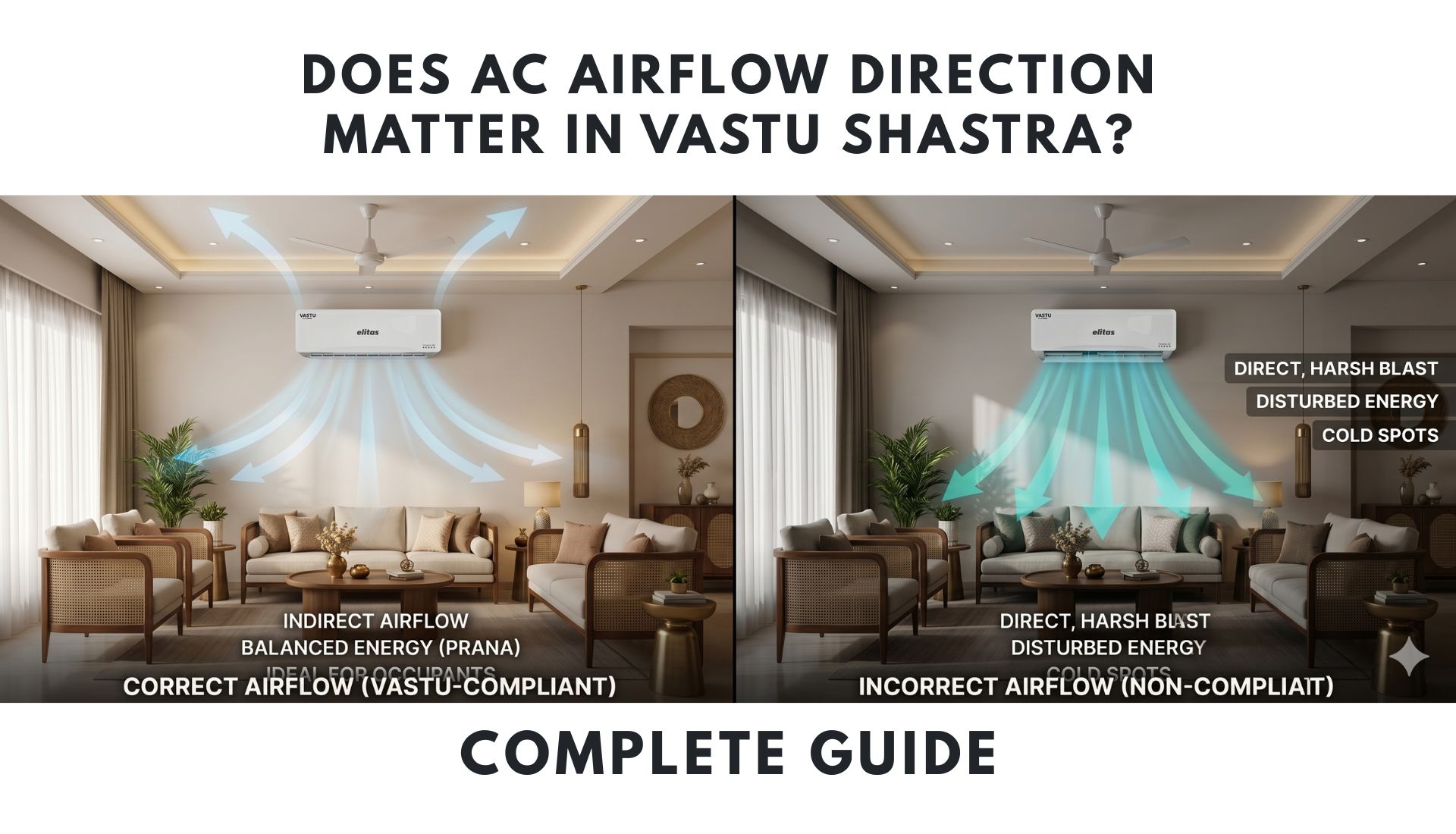
Air conditioners are designed to improve indoor comfort and cooling. However, according to Vastu Shastra, the direction of AC airflow may also affect the balance, comfort, and atmosphere inside a home.
Many homeowners focus only on where the AC unit is installed, but airflow direction is equally important. Balanced airflow can improve cooling efficiency, sleep quality, and room comfort.
According to Vastu principles, airflow should move smoothly across the room instead of directly hitting people continuously.
If you are looking for modern and energy-efficient cooling systems, explore smart air conditioners from Elitas Appliances.
Understanding Airflow in Vastu Shastra
Importance of the Air Element
Air is one of the five important elements in Vastu Shastra. Balanced airflow supports freshness, comfort, and positive energy movement inside the home.
Poor airflow may create discomfort and uneven cooling.
How Airflow Affects Home Environment
Proper airflow improves:
- Room comfort
- Cooling efficiency
- Air circulation
- Relaxation and sleep quality
Does AC Airflow Direction Matter According to Vastu?
Why Airflow Direction Is Important
The direction of cool air affects how evenly the room cools and how comfortable people feel inside the space.
Balanced airflow creates a more comfortable and peaceful indoor environment.
Effects of Incorrect Airflow Direction
- Uneven cooling
- Discomfort during sleep
- Cold air directly hitting people
- Poor air circulation
- Increased energy usage
Best AC Airflow Directions According to Vastu
Airflow Toward East or North
According to Vastu principles, airflow moving toward the East or North direction is generally considered balanced and comfortable.
This creates smoother cooling and better room comfort.
Upward or Indirect Airflow
Modern AC systems allow users to adjust airflow direction using swing settings.
Benefits of Indirect Airflow
- Even cooling distribution
- Improved comfort
- Avoids excessive cold air exposure
- Better airflow circulation
Explore advanced cooling technology in the Elitas Vastu Series Air Conditioners.
Airflow Directions to Avoid
Direct Airflow on the Bed
Continuous cold airflow directly on the bed may affect sleep comfort.
Many Vastu experts recommend indirect airflow for bedrooms.
Direct Airflow on Seating Areas
In living rooms, direct airflow on sofas or seating areas may create uneven comfort.
Constant Cold Air Exposure
Very strong airflow directly on people for long periods may create discomfort.
Bedroom AC Airflow Tips According to Vastu
Avoid Direct Airflow on Sleeping Area
The airflow should move across the room instead of directly hitting the bed.
Use Swing Mode
Swing mode helps distribute cool air evenly throughout the room.
Best Bedroom Cooling Practices
- Maintain moderate temperature settings
- Use balanced airflow direction
- Keep ventilation open when possible
Learn more in our Bedroom AC Placement Guide.
Living Room Airflow Direction Tips
Living rooms usually require balanced airflow because multiple people use the space.
Best Practices
- Spread airflow across the room
- Avoid direct airflow on seating
- Keep pathways open for ventilation
Office or Study Room Airflow Tips
Study rooms and offices should remain comfortable without excessive cold airflow.
- Maintain balanced room temperature
- Avoid airflow directly on work desks
- Use moderate fan speed settings
Best AC Placement for Proper Airflow
Recommended Directions
According to Vastu, the preferred directions for AC placement are:
- West wall
- South-West wall
- North-West wall (alternative option)
Directions to Avoid
- North-East wall
- South-East wall
Explore energy-efficient cooling systems at Elitas Appliances.
Common AC Airflow Mistakes
Direct Airflow on Bed
This may reduce comfort and disturb sleep quality.
Blocking Airflow with Furniture
Large furniture items may prevent proper air circulation.
Incorrect Swing Settings
Poor airflow adjustment may create uneven cooling.
Poor Room Ventilation
Fresh airflow is important for maintaining room comfort.
Vastu Remedies for Incorrect AC Airflow
Adjust Swing Mode
Use automatic swing settings for balanced cooling.
Use Air Deflectors
Deflectors help redirect cold air away from people.
Rearrange Furniture
Keep airflow pathways open for better circulation.
Improve Ventilation
Fresh air supports balanced cooling and comfort.
Benefits of Proper AC Airflow Direction
Better Cooling Comfort
Balanced airflow cools the room evenly.
Improved Sleep Quality
Indirect airflow creates a more relaxing sleep environment.
Balanced Room Temperature
Proper airflow prevents hot and cold spots inside the room.
Better Energy Efficiency
Efficient airflow improves cooling performance and reduces energy waste.
Positive Indoor Environment
Comfortable airflow creates a peaceful home atmosphere.
Combining Smart Cooling with Vastu
Smart AC Features
Modern AC systems offer advanced airflow control features.
Eco Mode and Airflow Control
Eco mode helps maintain comfortable cooling while reducing electricity usage.
Modern Cooling Solutions
Smart cooling systems can work together with Vastu-friendly placement and airflow principles.
Additional Tips for Better Cooling Comfort
Maintain Moderate Temperature
Very low temperatures may reduce comfort.
Clean AC Filters Regularly
Clean filters improve airflow performance.
Use Ceiling Fans Along with AC
Fans help distribute cool air evenly.
Conclusion
According to Vastu Shastra, AC airflow direction does matter because it affects room comfort, airflow balance, and overall indoor atmosphere.
Indirect and balanced airflow is generally considered the best option for maintaining comfort and proper cooling.
Simple adjustments like swing settings, airflow direction, and room ventilation can create a more comfortable and energy-efficient home environment.
For modern Vastu-friendly cooling solutions, explore the Elitas Vastu Series Air Conditioners.