
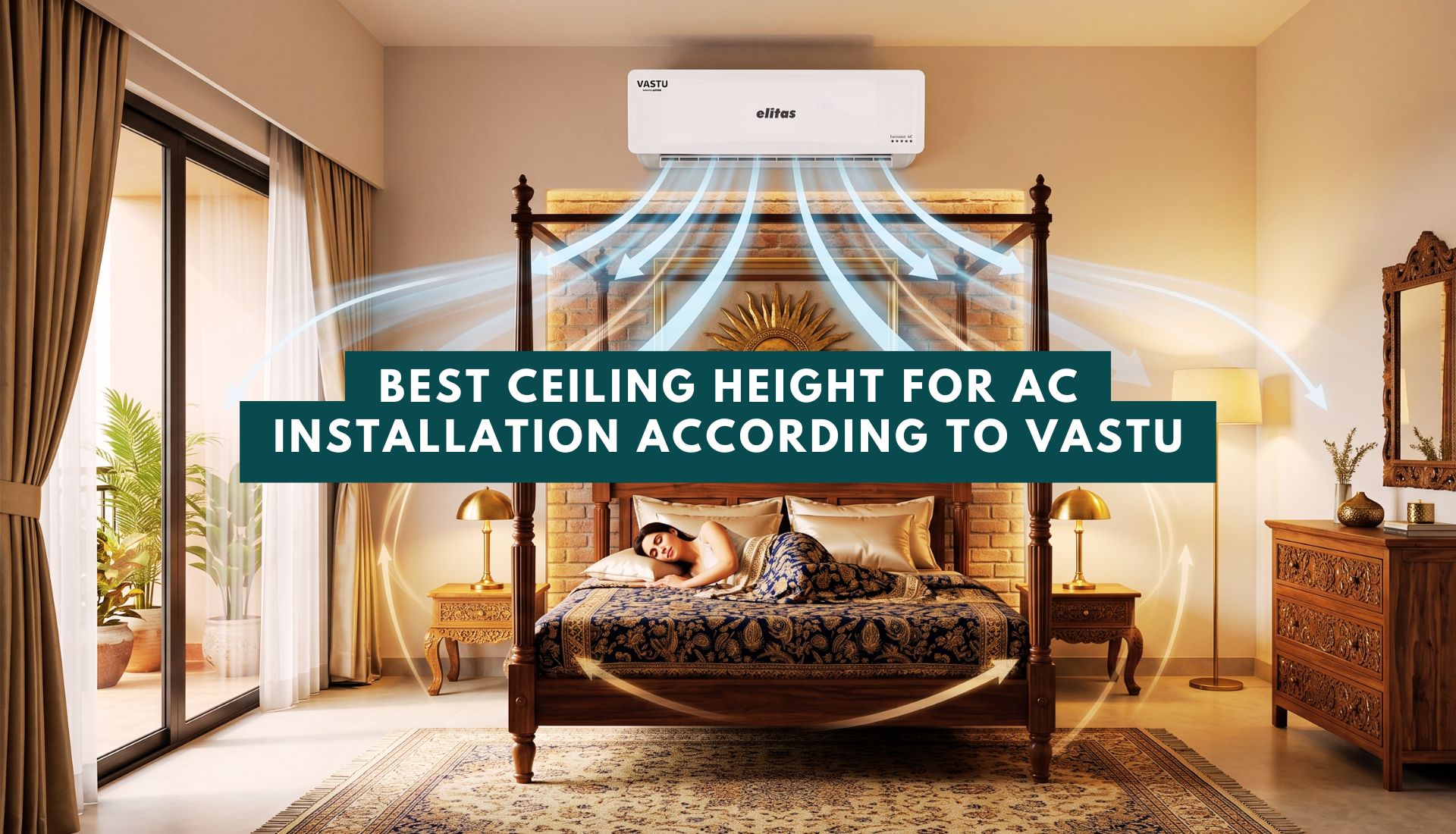
Air conditioners are an important part of modern homes. They improve comfort, indoor cooling, and air circulation during hot weather. However, many homeowners focus only on choosing the right AC model and often ignore proper installation height.
According to Vastu Shastra, the ceiling height and wall position of an AC unit can affect airflow balance, cooling efficiency, and overall comfort inside the home.
Installing the AC at the correct height helps cool air spread evenly across the room while avoiding discomfort caused by direct airflow.
If you are looking for advanced cooling systems, explore modern air conditioners from Elitas Appliances.
Why Ceiling Height Matters for AC Installation
Impact on Airflow Distribution
Cool air naturally moves downward after leaving the AC unit. The installation height affects how evenly this cool air spreads throughout the room.
If the AC is installed too high or too low, airflow distribution may become uneven.
Energy Efficiency Benefits
Correct installation height improves cooling performance and reduces unnecessary energy consumption.
Balanced airflow allows the room to cool more efficiently.
Comfort and Indoor Environment
Proper airflow helps maintain comfortable room temperatures without excessive cold spots.
Ideal Ceiling Height for AC Installation According to Vastu
Recommended Height for Split AC
According to practical cooling guidelines and Vastu-friendly airflow recommendations, split AC units are generally best installed around 7 to 8 feet above floor level.
Why Proper Height Is Important
- Supports smooth airflow movement
- Improves cooling distribution
- Avoids direct cold airflow on people
- Maintains balanced room comfort
Explore smart cooling systems in the Elitas Vastu Series Air Conditioners.
Ideal Distance Between AC and Ceiling
Recommended Gap
It is generally recommended to maintain a gap of around 4 to 6 inches between the indoor AC unit and the ceiling.
Benefits of Proper Clearance
- Better airflow intake
- Improved cooling efficiency
- Reduced pressure on the AC system
- Better air circulation
Best AC Placement According to Vastu
Recommended Walls
According to Vastu, the following walls are generally considered suitable for AC installation:
- West wall
- South-West wall
- North-West wall (alternative option)
Walls to Avoid
- North-East wall
- South-East wall
These directions may affect airflow balance according to traditional Vastu principles.
Bedroom AC Installation Height Tips
Avoid Direct Airflow on Bed
The airflow should move across the room instead of directly hitting the bed.
Balanced Cooling for Better Sleep
Proper installation height helps maintain comfortable cooling during sleep.
Recommended Bedroom Setup
- Install AC on side wall when possible
- Maintain balanced airflow direction
- Use moderate cooling temperatures
Learn more in our Bedroom AC Placement Guide.
Living Room AC Height Recommendations
Living rooms require even airflow distribution because multiple people use the space.
Best Practices
- Install AC high enough for wide airflow coverage
- Avoid blocked airflow paths
- Use swing mode for balanced cooling
Office or Study Room AC Height Tips
Study rooms and office spaces require comfortable airflow without excessive cooling.
- Avoid airflow directly on work desks
- Maintain moderate cooling settings
- Keep airflow balanced across the room
Common AC Installation Height Mistakes
Installing AC Too Close to Ceiling
This may block proper airflow intake and reduce cooling performance.
Installing AC Too Low
Low installation may create direct cold airflow discomfort.
Poor Airflow Direction
Incorrect airflow settings may create uneven cooling.
Blocking Airflow with Furniture
Large furniture items can interrupt cool air circulation.
Vastu Remedies for Incorrect AC Height
Adjust Airflow Direction
Use swing settings to improve airflow distribution.
Use Swing Mode
Automatic swing mode helps cool air spread evenly.
Improve Ventilation
Fresh airflow supports balanced room cooling.
Rearrange Furniture
Keep airflow pathways open whenever possible.
Benefits of Correct Ceiling Height for AC
Better Cooling Efficiency
Balanced airflow improves cooling performance.
Improved Air Circulation
Correct installation supports smooth air movement.
Better Sleep Comfort
Balanced airflow creates a more relaxing sleep environment.
Reduced Electricity Consumption
Efficient cooling reduces unnecessary energy usage.
Balanced Home Environment
Proper airflow creates a comfortable indoor atmosphere.
Modern Homes and Smart AC Installation
Combining Technology with Vastu
Modern smart AC systems can work together with traditional Vastu principles.
Smart Cooling Systems
Advanced cooling features improve comfort and airflow management.
Energy-Efficient Home Design
Balanced airflow and proper installation improve cooling performance naturally.
Explore energy-efficient cooling solutions at Elitas Appliances.
Additional Tips for Better Cooling
Use Ceiling Fans Along with AC
Fans help distribute cool air evenly.
Maintain Moderate Temperature Settings
Very low temperatures may reduce comfort.
Regular AC Maintenance
Clean filters improve cooling efficiency and airflow.
Importance of Balanced Airflow in Modern Homes
Modern homes require both efficient cooling and comfortable airflow. Correct AC installation height helps create balanced cooling while maintaining room comfort.
Small placement adjustments can improve cooling performance significantly.
Conclusion
The ceiling height and installation position of an AC unit play an important role in cooling efficiency, airflow distribution, and comfort according to Vastu principles.
Installing split AC units around 7 to 8 feet above floor level with proper ceiling clearance helps create balanced airflow and better cooling performance.
Simple adjustments in installation height, airflow direction, and ventilation can improve indoor comfort and energy efficiency.
For modern Vastu-friendly cooling systems, explore the Elitas Vastu Series Air Conditioners.