
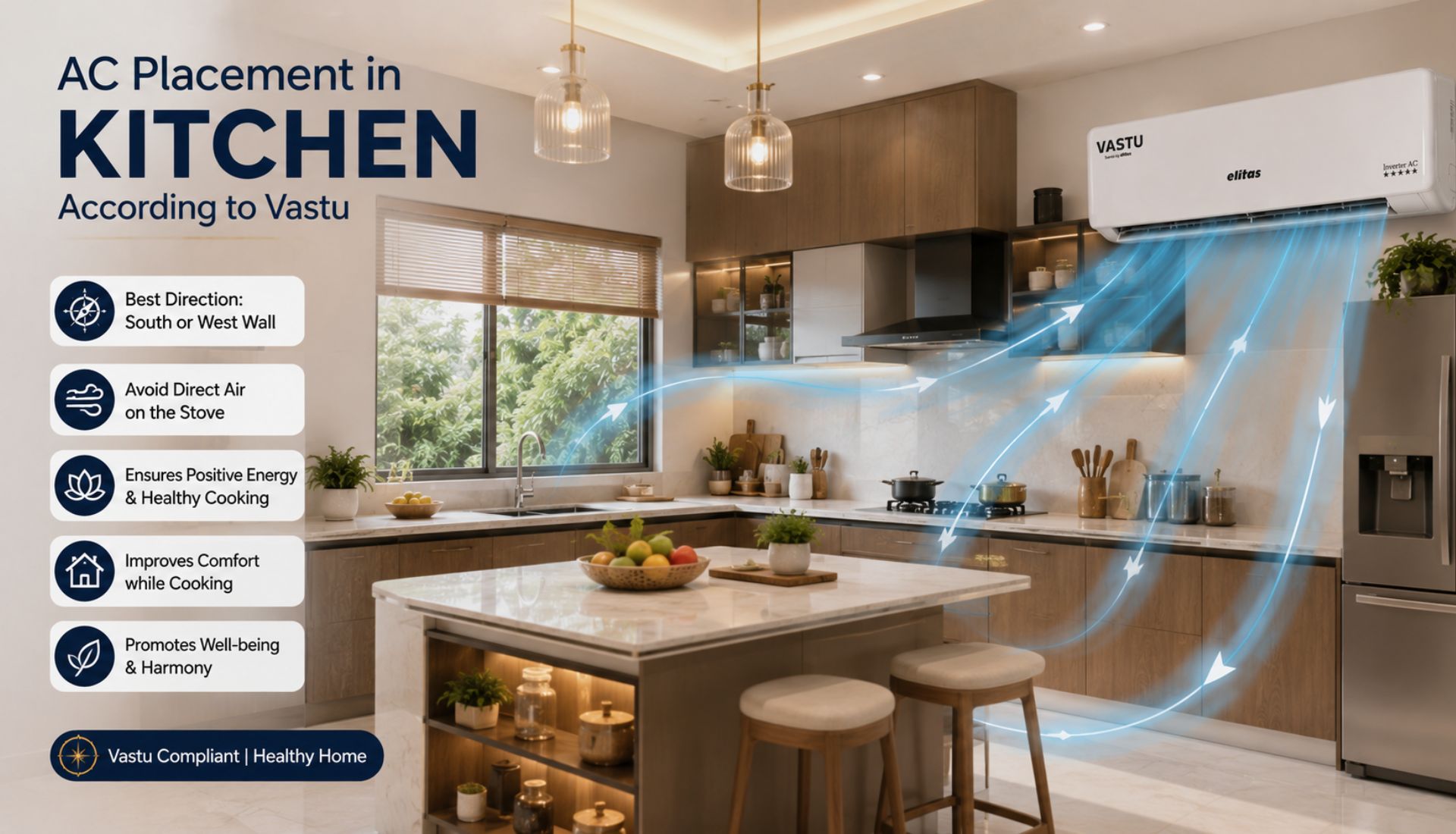
 The kitchen is one of the busiest areas in any home. It is where meals are prepared, family members gather, and daily cooking activities take place. Modern kitchens often include multiple appliances such as gas stoves, ovens, microwaves, refrigerators, and dishwashers. While these appliances improve convenience, they also generate considerable heat.
As temperatures rise during cooking, many homeowners consider installing an air conditioner in the kitchen. However, those who follow Vastu Shastra often wonder whether kitchen AC installation is considered good or bad according to traditional principles.
The answer depends on both practical cooling requirements and proper placement. A thoughtfully installed AC can improve comfort, support airflow, and make cooking more enjoyable while maintaining a Vastu-friendly environment.
In this guide, we will explore the advantages of kitchen air conditioning, the best AC directions according to Vastu, installation considerations, common mistakes, and how modern cooling technology can support contemporary kitchen design.
For energy-efficient cooling solutions, explore Elitas Air Conditioners designed for modern Indian homes.
Why Homeowners Consider Installing an AC in the Kitchen
Traditional kitchens relied on windows and exhaust fans for ventilation. However, modern homes often feature enclosed modular kitchens that can become warm during cooking.
Some common reasons homeowners install ACs in kitchens include:
- Reducing cooking heat
- Improving comfort during meal preparation
- Managing humidity levels
- Supporting better airflow
- Creating a pleasant working environment
- Improving overall indoor comfort
Understanding the Kitchen’s Role in Vastu Shastra
The Fire Element
In Vastu Shastra, the kitchen is associated with the fire element. Since cooking involves heat and energy, kitchen planning often emphasizes maintaining balance between heat generation and air circulation.
The Importance of Direction
Vastu traditionally considers directional placement when planning rooms, appliances, and airflow patterns.
Modern Interpretation
Modern Vastu experts often combine traditional concepts with practical design requirements. The focus is on creating comfortable, functional spaces while respecting airflow and room balance.
Is Kitchen AC Installation Good According to Vastu?
From a practical perspective, installing an AC in the kitchen can significantly improve comfort, especially during summer months.
From a Vastu perspective, the key consideration is placement rather than the presence of the AC itself.
If the AC is positioned correctly and does not interfere with cooking activities or airflow patterns, many homeowners successfully integrate air conditioning into Vastu-inspired kitchens.
Best Directions for Kitchen AC Placement According to Vastu
West Wall Placement
The West wall is often considered one of the most practical locations for split AC installation. It allows effective cooling without interfering with cooking zones.
North-West Wall Placement
This location can support balanced airflow and comfortable cooling throughout the kitchen.
South-West Wall Placement
Depending on the kitchen layout, the South-West wall may also be suitable for AC installation.
Homeowners looking for Vastu-oriented cooling technology can explore the Elitas Vastu Series Air Conditioners.
Directions Commonly Avoided for Kitchen AC Placement
South-East Direction
Since the South-East is traditionally associated with the fire element, many Vastu practitioners prefer avoiding AC placement directly in this zone.
North-East Direction
The North-East area is often kept open and free from heavy appliances.
Can an AC Be Installed Near a Stove?
Installing an AC directly above or very close to a cooking stove is generally not recommended.
Reasons include:
- Exposure to grease and cooking fumes
- Reduced cooling efficiency
- Increased maintenance requirements
- Potential airflow disruption
Maintaining adequate distance between the AC and cooking area improves performance and longevity.
Importance of Kitchen Ventilation
Air conditioning should complement—not replace—proper ventilation.
Every kitchen should include:
- Exhaust fans
- Chimneys or range hoods
- Ventilation openings
- Natural airflow pathways
These features help remove heat, smoke, and cooking odors.
Ideal Airflow Direction in a Kitchen
Kitchen airflow should support comfort without directly interfering with cooking activities.
Best practices include:
- Avoid direct airflow on cooking flames
- Promote uniform air circulation
- Keep airflow pathways unobstructed
- Use adjustable swing modes when available
Kitchen AC Placement for Different Layouts
Small Modular Kitchens
Compact kitchens require careful airflow management to avoid overcooling specific areas.
Open Kitchens
Open kitchen designs benefit from airflow that can extend into adjoining dining or living areas.
Kitchen-Dining Combinations
Strategic placement helps maintain comfort across both spaces.
Large Luxury Kitchens
Larger kitchens may require higher-capacity AC systems or multiple cooling zones.
Best Temperature Settings for Kitchen Comfort
Most experts recommend maintaining temperatures between 24°C and 26°C.
This range provides:
- Comfortable working conditions
- Energy-efficient operation
- Balanced cooling performance
- Lower electricity costs
Modern AC Features Suitable for Kitchens
- Inverter Technology
- Air Purification Systems
- Anti-Dust Filters
- Smart Sensors
- Wi-Fi Controls
- Multi-Directional Airflow
Common Kitchen AC Installation Mistakes
- Installing AC too close to cooking appliances
- Ignoring ventilation requirements
- Blocking airflow with cabinets
- Selecting incorrect AC capacity
- Neglecting regular maintenance
Benefits of Proper Kitchen AC Installation
- Improved cooking comfort
- Reduced heat stress
- Better indoor air quality
- Enhanced airflow management
- More enjoyable kitchen experience
- Energy-efficient cooling
How Modern Cooling Technology Supports Vastu-Friendly Kitchens
Modern cooling solutions allow homeowners to combine advanced technology with thoughtful room planning. Smart airflow controls, efficient cooling systems, and intelligent temperature management help create kitchens that are both comfortable and functional.
Conclusion
Kitchen AC installation can be a practical and effective solution for modern homes. According to Vastu-inspired planning, proper placement and balanced airflow are more important than avoiding air conditioning altogether.
By selecting suitable installation locations, maintaining proper ventilation, and using energy-efficient cooling technology, homeowners can create comfortable kitchens that support both functionality and design preferences.
Learn more about innovative cooling solutions at Elitas Appliances.
“`