
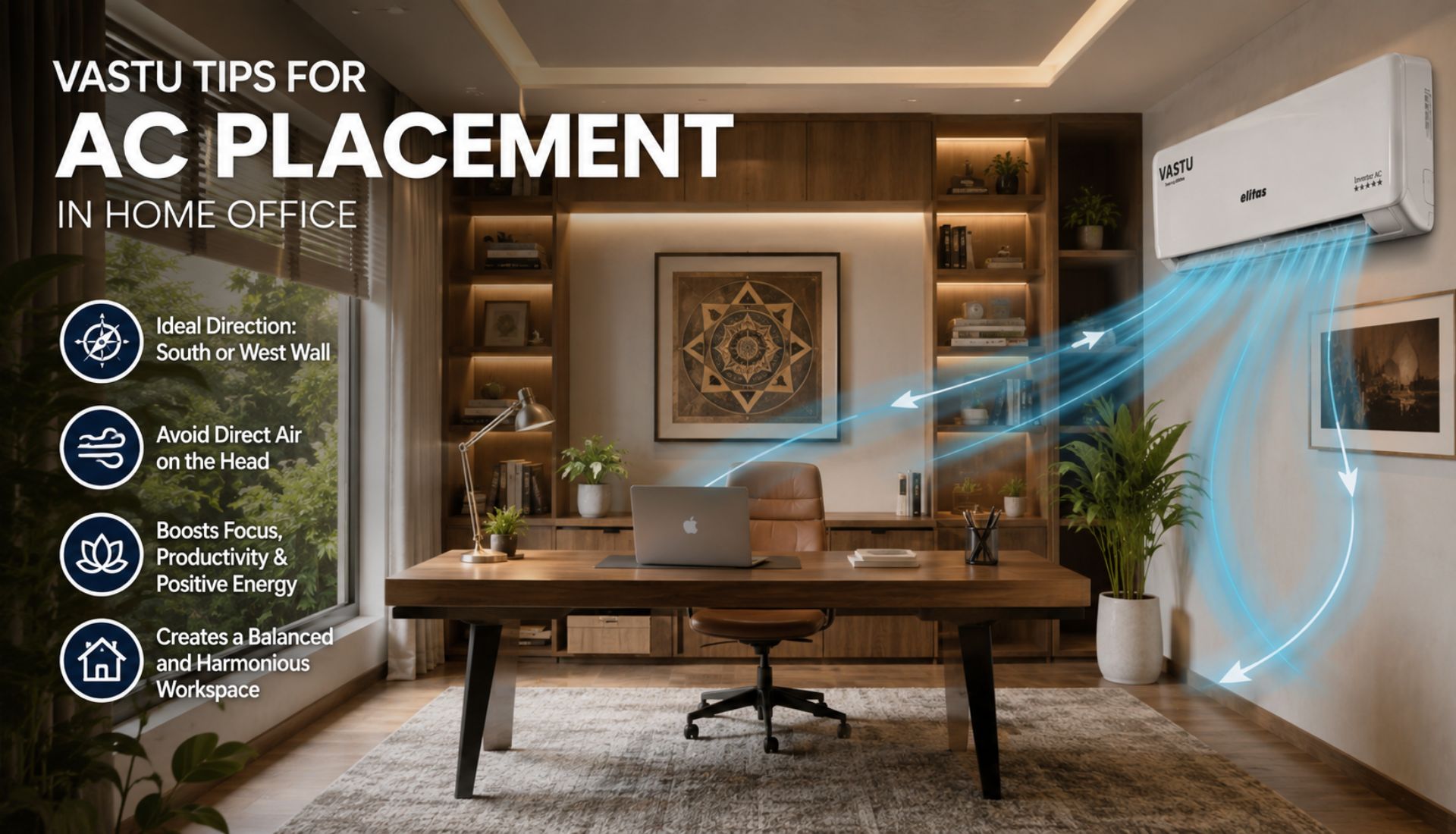
Study rooms and home offices have become essential spaces in modern homes. Students attend online classes, professionals work remotely, freelancers manage businesses, and entrepreneurs run operations directly from their homes. As a result, creating a comfortable and productive environment has never been more important.
While furniture, lighting, and internet connectivity often receive the most attention, cooling plays an equally important role. A room that is too hot, stuffy, or poorly ventilated can affect concentration, productivity, and overall comfort.
This is where proper air conditioner placement becomes critical. The location of your AC affects airflow distribution, cooling performance, indoor comfort, and energy consumption. For homeowners who also follow Vastu Shastra, AC placement can be planned to align with airflow principles and room balance.
If you are looking for energy-efficient cooling solutions for your workspace, explore Elitas Air Conditioners, designed to deliver comfortable cooling for modern homes.
Why AC Placement Matters in Study Rooms and Home Offices
Many people assume that installing an air conditioner anywhere in the room will provide sufficient cooling. However, the exact location of the AC significantly influences how air moves through the space.
Proper placement helps:
- Maintain consistent room temperatures
- Improve concentration and productivity
- Reduce hot and cold spots
- Enhance indoor comfort
- Lower electricity consumption
- Improve air circulation
Since study rooms and home offices are often occupied for long periods, airflow comfort becomes especially important.
The Relationship Between Temperature and Productivity
Research consistently shows that room temperature affects focus, decision-making, and work performance. When a room becomes too warm, people often experience fatigue and reduced concentration.
On the other hand, excessively cold environments can also become distracting and uncomfortable.
A properly positioned air conditioner helps maintain stable temperatures that support productive work and study sessions.
Understanding Airflow in Workspaces
An air conditioner does more than cool a room. It controls airflow patterns throughout the space.
When installed correctly, cool air spreads evenly across the room. When installed incorrectly, some areas may become excessively cold while others remain warm.
Good airflow helps create a comfortable environment where occupants can work or study without constantly adjusting temperature settings.
Key Factors to Consider Before Installing an AC
Room Size
The size of the room determines cooling requirements and influences placement decisions.
Desk Position
The location of the study desk or workstation affects airflow planning.
Window Placement
Windows influence sunlight exposure and heat gain.
Electronic Equipment
Computers, monitors, printers, and other devices generate heat that affects cooling requirements.
Furniture Layout
Bookshelves, cabinets, and storage units can impact airflow movement.
Best AC Placement for Study Rooms
Install on a Side Wall
A side-wall installation often allows air to circulate evenly throughout the room without directly hitting the study desk.
Avoid Direct Airflow Toward the Desk
Cold air blowing continuously onto a student or professional may cause discomfort during long work sessions.
Maintain Recommended Height
Split AC indoor units should generally be installed high on the wall to allow effective air distribution.
Keep Airflow Pathways Clear
Avoid placing tall furniture directly in front of the AC unit.
Best AC Placement for Home Offices
Home offices often contain more electronic equipment than study rooms.
When positioning the AC:
- Ensure airflow reaches the entire workspace
- Avoid direct airflow onto computers
- Maintain balanced room temperatures
- Allow unrestricted air circulation
Vastu Guidelines for Study Room AC Placement
Homeowners who follow Vastu often consider directional placement when installing major appliances.
West Wall
Commonly preferred for balanced airflow.
South-West Wall
Often associated with stability and suitable appliance placement.
North-West Wall
May support smooth air circulation.
Many homeowners exploring Vastu-oriented cooling solutions choose the Elitas Vastu Series Air Conditioners.
Directions Commonly Avoided
- North-East Direction
- South-East Direction
Ideal AC Airflow Direction for Productivity
The goal is to create indirect airflow rather than direct cold drafts.
Benefits include:
- Improved comfort
- Reduced distraction
- Balanced cooling
- Better focus
- Enhanced workspace usability
Best Temperature Settings for Study Rooms and Home Offices
Most experts recommend maintaining temperatures between 24°C and 26°C.
This range provides:
- Comfortable cooling
- Improved energy efficiency
- Lower electricity bills
- Better productivity
Modern AC Features That Improve Workspace Comfort
- Inverter Technology
- Smart Sensors
- Air Purification Systems
- Silent Operation
- Wi-Fi Connectivity
- Multi-Directional Airflow
Conclusion
Proper AC placement in study rooms and home offices helps create a productive, comfortable, and energy-efficient environment. By combining airflow planning, modern cooling technology, and Vastu-inspired design principles, homeowners can improve both comfort and performance.
Explore innovative cooling solutions from Elitas Appliances and discover air conditioners designed for modern lifestyles.
“`