
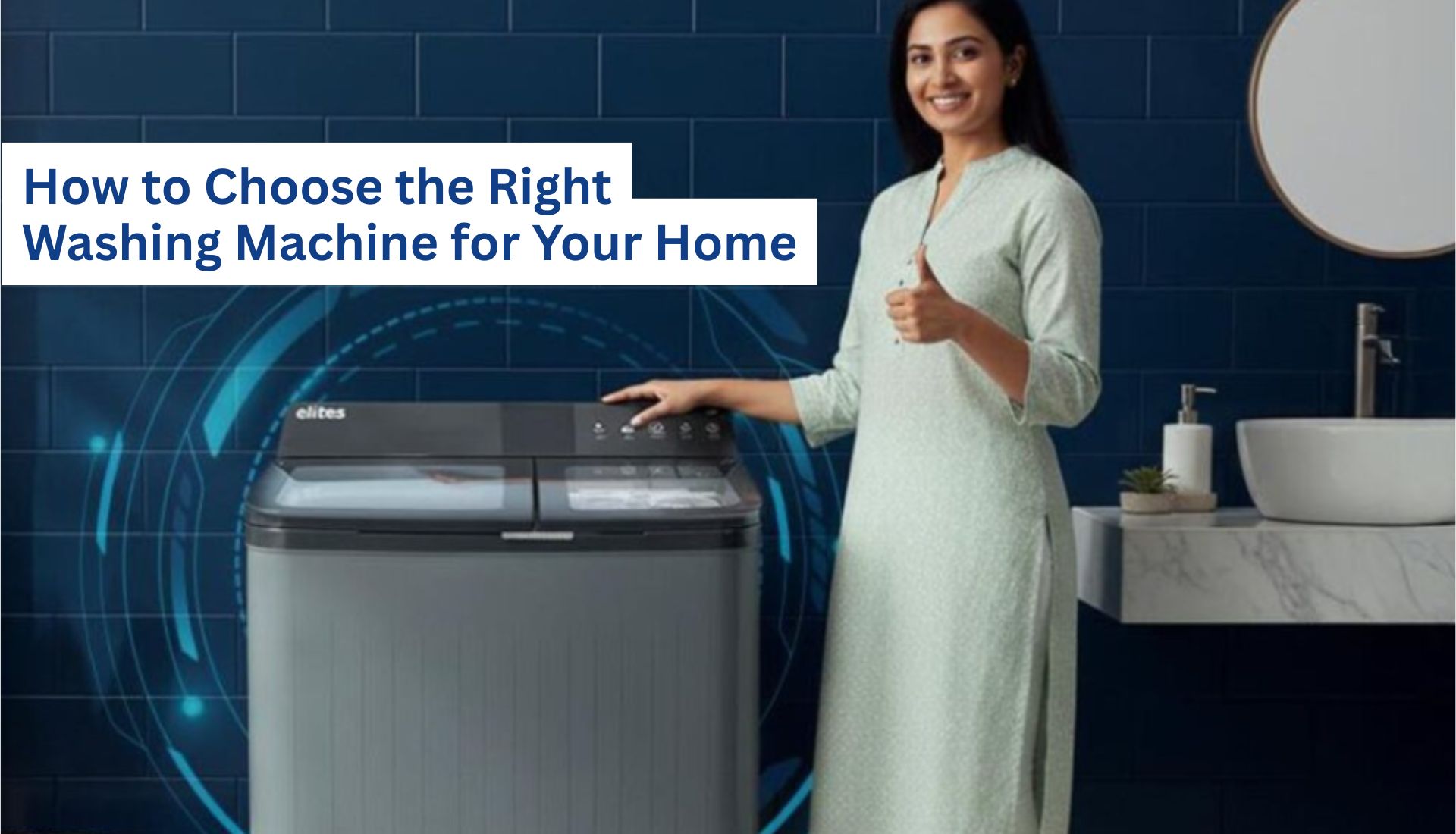
 A washing machine is one of the most useful appliances in a modern home. It saves time, reduces manual effort, and makes everyday laundry easier. However, choosing the right washing machine can be confusing because there are many models, capacities, features, and technologies available.
Should you buy a top-load or front-load washing machine? What capacity is suitable for your family? Do you need an inverter motor? Which wash programs are actually useful? How important is energy efficiency?
The answers depend on your family’s size, laundry habits, available space, budget, and the type of clothes you wash regularly.
This guide explains how to choose the right washing machine for your home using simple and practical points.
Explore modern home appliances at Elitas Appliances and choose appliances designed for convenient everyday living.
Why Choosing the Right Washing Machine Matters
A washing machine can be used several times a week, so choosing the right model can make a noticeable difference to your daily routine.
The right washing machine can help you:
- Save time on regular laundry.
- Reduce manual washing effort.
- Handle your family’s laundry more conveniently.
- Wash different fabrics using suitable programs.
- Improve washing consistency.
- Manage water and electricity consumption more effectively.
Instead of choosing a washing machine only because it has the latest features, first understand your actual laundry requirements.
1. Choose the Right Washing Machine Capacity
Capacity is one of the most important factors to consider. Washing machine capacity is generally measured in kilograms and indicates the amount of dry laundry the machine is designed to handle in a wash cycle.
A small household may need a different capacity from a large family. If the machine is too small, you may need to run several cycles. If it is much larger than your normal requirements, you may be paying for capacity you rarely use.
General Washing Machine Capacity Guide
| Household Size | General Capacity Range | Typical Requirement |
|---|---|---|
| 1–2 people | 5–6 kg | Small and regular laundry loads |
| 2–3 people | 6–7 kg | Regular everyday clothing |
| 3–4 people | 7–8 kg | Family laundry and occasional larger loads |
| 4–6 people | 8–10 kg | Frequent and larger laundry loads |
| 6+ people | 9–12 kg+ | Large and frequent laundry requirements |
These are general guidelines rather than strict rules. Your ideal capacity also depends on how often you wash clothes and whether you regularly wash bedsheets, towels, curtains, blankets, or other bulky items.
2. Top Load vs Front Load Washing Machine
Another important decision is choosing between a top-load and front-load washing machine.
What Is a Top Load Washing Machine?
A top-load washing machine has its loading opening on the top. Clothes are placed into the drum from above.
Top-load machines can be convenient for people who prefer easy loading and unloading.
Potential advantages include:
- Easy loading from the top.
- Convenient everyday operation.
- Simple access to the washing compartment.
- Suitable for many household laundry requirements.
What Is a Front Load Washing Machine?
A front-load washing machine has a door at the front of the appliance. Clothes are loaded through this door and the drum rotates horizontally.
Depending on the model, front-load machines can provide advanced wash programs, strong washing performance, and high spin speeds.
Potential advantages include:
- Efficient washing performance on many models.
- Multiple specialized programs.
- High-speed spinning on selected models.
- Some models can be stacked with a compatible dryer.
Neither type is automatically the best for every household. Consider your available space, budget, preferred loading style, and laundry habits.
3. Check the Available Installation Space
Before purchasing a washing machine, measure the area where you plan to install it.
Check the following:
- Width.
- Height.
- Depth.
- Door or lid opening space.
- Water inlet position.
- Drainage arrangement.
- Electrical socket location.
Remember that the machine’s physical dimensions are not the only consideration. A front-load model needs enough space in front for the door to open, while a top-load model requires adequate clearance above the machine.
4. Select Wash Programs Based on Your Laundry
Modern washing machines may offer several wash programs. These programs are designed for different fabrics, load sizes, and levels of dirt.
Depending on the model, useful programs may include:
- Normal wash.
- Quick wash.
- Cotton.
- Delicate.
- Wool or specialized fabric care.
- Heavy wash.
- Baby-care program.
- Drum cleaning.
Choose programs that match the clothes your family regularly washes. A machine with many programs is useful only when those programs meet your actual requirements.
5. Look at Energy and Water Efficiency
Energy and water efficiency should be considered when choosing a washing machine because the appliance may operate several times every week.
When comparing models, check the applicable energy-efficiency information, water consumption, cycle duration, and manufacturer’s specifications.
An efficient washing machine can help reduce resource consumption while providing convenient laundry performance.
For Indian consumers, it is also useful to check current official energy-efficiency information before purchasing because ratings and regulations may change over time.
6. Check Motor Technology and Spin Speed
The motor is an important component of a washing machine. Different models can use different motor technologies designed to provide a combination of washing performance, durability, noise control, and energy efficiency.
Spin speed is another specification worth checking. A higher spin speed can remove more water from clothes before the drying stage, although the appropriate speed depends on the fabric and selected wash program.
When comparing washing machines, consider both motor technology and available spin-speed settings rather than focusing on one specification alone.
7. Look for Useful Smart Features
Modern washing machines can include features designed to make laundry easier and more convenient.
Depending on the model, these may include:
- Delay start.
- Child lock.
- Digital display.
- Automatic load sensing.
- Multiple water-level settings.
- Smart diagnostics.
- Wi-Fi or app connectivity on selected models.
- Automatic wash-program selection.
Choose smart features based on your lifestyle. There is little benefit in paying more for features that you are unlikely to use.
8. Consider Noise and Vibration
Noise and vibration can be important if your washing machine is installed near a bedroom, living room, or kitchen.
Look for models with suitable vibration-control features and stable construction. Correct installation is equally important.
The machine should be installed on a stable and level surface. An uneven floor can increase vibration even when the appliance itself is designed for quieter operation.
Ready to Choose the Right Washing Machine?
The right washing machine should match your family size, laundry needs, available space, and lifestyle. Compare capacity, wash programs, efficiency, features, and maintenance requirements before making your decision.
Explore Elitas Appliances for modern home appliance solutions designed for convenient everyday living.
Ready to Choose the Right Washing Machine?
The right washing machine should match your family size, laundry needs, available space, and lifestyle. Compare capacity, wash programs, efficiency, features, and maintenance requirements before making your decision.
Explore Elitas Appliances for modern home appliance solutions designed for convenient everyday living.