
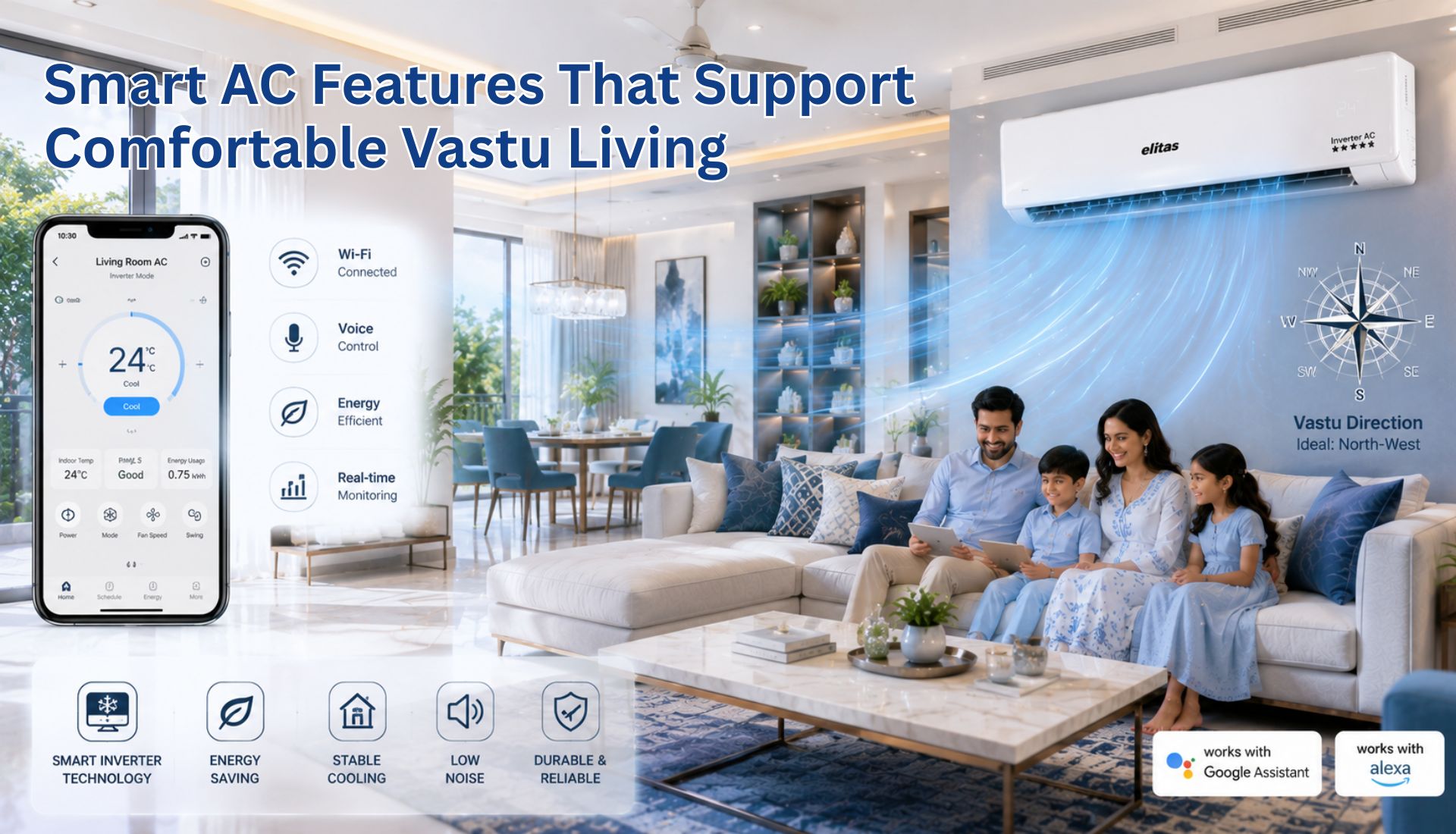
 Air conditioners have evolved far beyond simple cooling machines. Today’s smart air conditioners combine advanced technology with energy efficiency, intelligent automation, and user-friendly controls to create a more comfortable living environment.
Many homeowners in India also consider Vastu Shastra when designing or renovating their homes. While Vastu recommendations are based on traditional beliefs rather than scientific evidence, many families choose appliances and room layouts that align with these principles. A smart air conditioner can complement this approach by helping maintain consistent indoor comfort, improving energy efficiency, and offering greater control over the home environment.
In this guide, we’ll explore the latest smart AC features, explain how they improve everyday living, and discuss how they can fit into Vastu-conscious home planning.
At Elitas Appliances, we offer premium cooling solutions including our Vastu Series Air Conditioners, designed for modern Indian homes seeking efficient cooling and thoughtful installation options.
Air conditioners have evolved far beyond simple cooling machines. Today’s smart air conditioners combine advanced technology with energy efficiency, intelligent automation, and user-friendly controls to create a more comfortable living environment.
Many homeowners in India also consider Vastu Shastra when designing or renovating their homes. While Vastu recommendations are based on traditional beliefs rather than scientific evidence, many families choose appliances and room layouts that align with these principles. A smart air conditioner can complement this approach by helping maintain consistent indoor comfort, improving energy efficiency, and offering greater control over the home environment.
In this guide, we’ll explore the latest smart AC features, explain how they improve everyday living, and discuss how they can fit into Vastu-conscious home planning.
At Elitas Appliances, we offer premium cooling solutions including our Vastu Series Air Conditioners, designed for modern Indian homes seeking efficient cooling and thoughtful installation options.
What Is a Smart Air Conditioner?
A smart air conditioner is equipped with advanced technology that allows users to control cooling through mobile apps, Wi-Fi, voice assistants, or intelligent automation. These features provide greater convenience while helping homeowners manage electricity consumption more effectively. Unlike traditional air conditioners, smart ACs can automatically adjust cooling based on room conditions, occupancy, or user preferences. Common smart features include:- Wi-Fi connectivity
- Mobile app control
- Voice assistant compatibility
- AI-powered cooling
- Energy monitoring
- Smart scheduling
- Sleep mode
- Auto-clean technology
- Air quality monitoring (available on some models)
1. Wi-Fi Connectivity for Convenient Control
Wi-Fi-enabled air conditioners allow you to control your AC from anywhere using a smartphone app. Whether you’re returning from work or travelling, you can adjust the temperature before arriving home. Benefits include:- Turn the AC on or off remotely.
- Adjust temperature settings.
- Change operating modes.
- Monitor energy usage (on supported models).
- Receive maintenance reminders.
2. Inverter Technology for Better Energy Efficiency
One of the most valuable smart features is inverter technology. Instead of constantly switching the compressor on and off, an inverter AC adjusts compressor speed according to the room’s cooling requirements. Advantages include:- Lower electricity consumption.
- More stable room temperature.
- Reduced compressor wear.
- Quieter operation.
- Improved long-term efficiency.
3. AI-Powered Cooling
Some smart air conditioners use artificial intelligence (AI) to learn user preferences and optimize cooling automatically. Over time, the system may adjust temperature settings and operating patterns based on usage habits and environmental conditions. Depending on the model, AI features may:- Adjust cooling based on room temperature.
- Reduce unnecessary compressor operation.
- Improve comfort throughout the day.
- Support energy-efficient operation.
4. Voice Assistant Compatibility
Many smart ACs can be connected to popular voice assistants, allowing users to operate the air conditioner using simple voice commands. Examples include:- Turning the AC on or off.
- Changing temperature settings.
- Switching between cooling modes.
- Setting timers.
- Checking operating status.
5. Smart Scheduling
Smart scheduling allows users to create automatic cooling routines throughout the day. For example:- Start cooling before family members return home.
- Automatically switch off the AC during office hours.
- Reduce cooling overnight while maintaining comfort.
- Operate according to seasonal requirements.
Smart AC Features and Vastu Living
Many homeowners view Vastu as a way to create balanced, comfortable living spaces. While smart technology does not influence Vastu principles directly, features such as consistent temperature control, better air circulation, quieter operation, and improved indoor comfort can complement the overall goal of creating a pleasant home environment. Traditional Vastu recommendations for AC placement should always be balanced with practical considerations such as proper airflow, manufacturer installation guidelines, and professional advice.6. Smart Energy Monitoring
One of the most useful features in many smart air conditioners is energy monitoring. Depending on the model, you can view electricity usage through a mobile app and better understand how your cooling habits affect your energy consumption. Energy monitoring can help you:- Track daily and monthly electricity usage.
- Identify unnecessary AC operating hours.
- Adjust cooling schedules to save energy.
- Monitor usage during peak summer months.
- Develop more energy-efficient habits.
7. Auto-Clean Technology for Better Hygiene
Dust and moisture can build up inside an air conditioner over time. Some smart ACs include an auto-clean function that helps reduce moisture inside the indoor unit after use. Benefits of auto-clean technology include:- Helps keep the indoor unit cleaner.
- Reduces moisture buildup.
- Supports consistent airflow.
- May reduce unpleasant odours caused by moisture.
- Complements regular maintenance.
8. Sleep Mode for Night-Time Comfort
Sleep Mode automatically adjusts the temperature while you sleep to improve comfort and reduce unnecessary electricity consumption. Typical benefits include:- Maintains a comfortable sleeping environment.
- Reduces excessive cooling during the night.
- May help lower electricity usage.
- Supports quieter operation.
9. Air Purification and Better Indoor Air Quality
Some premium smart air conditioners include advanced air filtration or air purification features designed to improve indoor air quality. The exact filtration technology depends on the manufacturer and model. Depending on the product, these features may help:- Reduce airborne dust.
- Capture certain allergens.
- Improve indoor comfort.
- Support cleaner circulating air.
10. Eco Mode for Everyday Savings
Eco Mode is another practical feature available on many smart air conditioners. It adjusts cooling performance to reduce electricity consumption while maintaining a comfortable room temperature. Eco Mode is especially useful:- During moderate weather.
- At night.
- When the room is already cool.
- For everyday energy savings.
Common Mistakes to Avoid with Smart ACs
Smart features can only deliver their full benefits when the air conditioner is installed and used correctly.- Ignoring regular filter cleaning.
- Keeping Wi-Fi features disabled and not using energy schedules.
- Setting very low temperatures for long periods.
- Blocking indoor airflow with furniture or curtains.
- Installing the outdoor unit in poorly ventilated spaces.
- Skipping annual professional servicing.
- Choosing the wrong AC capacity for the room.
Why Choose the Elitas Vastu Series Air Conditioner?
At Elitas Appliances, we understand that today’s homeowners want more than just cooling. They want comfort, efficiency, elegant design, and products that suit their lifestyle and home planning preferences. The Elitas Vastu Series Air Conditioner combines advanced cooling technology with installation options that support Vastu-conscious home layouts. Key benefits include:- Energy-efficient inverter technology.
- Reliable cooling for Indian weather conditions.
- Modern and stylish design.
- Suitable for Vastu-conscious installation planning.
- Designed for dependable everyday comfort.
Vastu Series Air Conditioners Product Page
Benefits of Smart AC Features
Choosing a smart air conditioner offers several practical advantages for modern homes:- Greater convenience through app and voice control.
- Improved energy efficiency when smart features are used effectively.
- More consistent indoor comfort.
- Better control over cooling schedules.
- Quieter operation.
- Potential savings on electricity bills.
- Enhanced user experience with intelligent automation.
- Compatibility with many smart home ecosystems.
Conclusion
Smart air conditioners have transformed home cooling by combining advanced technology with everyday convenience. Features such as Wi-Fi control, inverter technology, AI-assisted cooling, energy monitoring, Sleep Mode, Eco Mode, and air filtration can help improve comfort while supporting more efficient energy use. For homeowners who follow Vastu Shastra, these modern features can complement traditional home planning when combined with thoughtful AC placement. Since Vastu recommendations are based on traditional beliefs rather than scientific evidence, they should be considered alongside the manufacturer’s installation instructions and professional HVAC advice. If you are looking for an air conditioner that combines modern technology with Vastu-conscious planning, explore the Elitas Vastu Series Air Conditioners. They are designed to deliver reliable cooling, energy efficiency, and lasting comfort for Indian homes.Upgrade to Smarter Cooling Today
Visit Elitas Appliances to explore our latest range of smart air conditioners and discover how the Elitas Vastu Series can help you enjoy efficient cooling, advanced technology, and a comfortable home environment.Frequently Asked Questions
1. What is a smart air conditioner?
A smart air conditioner is an AC with advanced features such as Wi-Fi connectivity, mobile app control, voice assistant compatibility, smart scheduling, and energy monitoring. Depending on the model, it may also include AI-assisted cooling, auto-clean technology, and advanced filtration.
2. Do smart AC features help save electricity?
Yes. Features such as inverter technology, smart scheduling, Eco Mode, and energy monitoring can help reduce unnecessary electricity consumption when used correctly. Actual savings depend on installation quality, usage habits, insulation, and climate.
3. Can I control a smart AC using my smartphone?
Yes. Many smart ACs allow you to control temperature, operating modes, timers, and schedules through a dedicated mobile app connected via Wi-Fi.
4. Is Wi-Fi necessary for a smart AC?
Basic cooling functions work without Wi-Fi, but features like remote control, scheduling, energy monitoring, and firmware updates may require an internet connection, depending on the model.
5. Does smart technology improve Vastu?
Smart features do not affect Vastu principles directly. However, they can help maintain a comfortable indoor environment through consistent cooling and efficient operation. Vastu recommendations are based on traditional beliefs rather than scientific evidence.
6. Which AC direction is recommended according to Vastu?
According to traditional Vastu Shastra, the South-East is commonly preferred for electrical appliances, while the North-West is another direction many homeowners consider. Practical installation requirements and manufacturer guidelines should always take priority.
7. What is the best temperature setting for a smart AC?
A temperature between 24°C and 26°C is generally recommended to balance comfort and energy efficiency.
8. How often should a smart AC be serviced?
Professional servicing is generally recommended at least once a year, and filters should be cleaned regularly according to the manufacturer’s instructions and usage conditions.
9. Is an inverter AC better than a non-inverter AC?
For many households, inverter ACs provide more consistent cooling and improved energy efficiency because they adjust compressor speed based on cooling demand rather than frequently switching on and off.
10. Why choose the Elitas Vastu Series Air Conditioner?
The Elitas Vastu Series Air Conditioner combines modern inverter technology, energy-efficient cooling, and installation options designed for homeowners who wish to incorporate Vastu-conscious planning into their homes.