
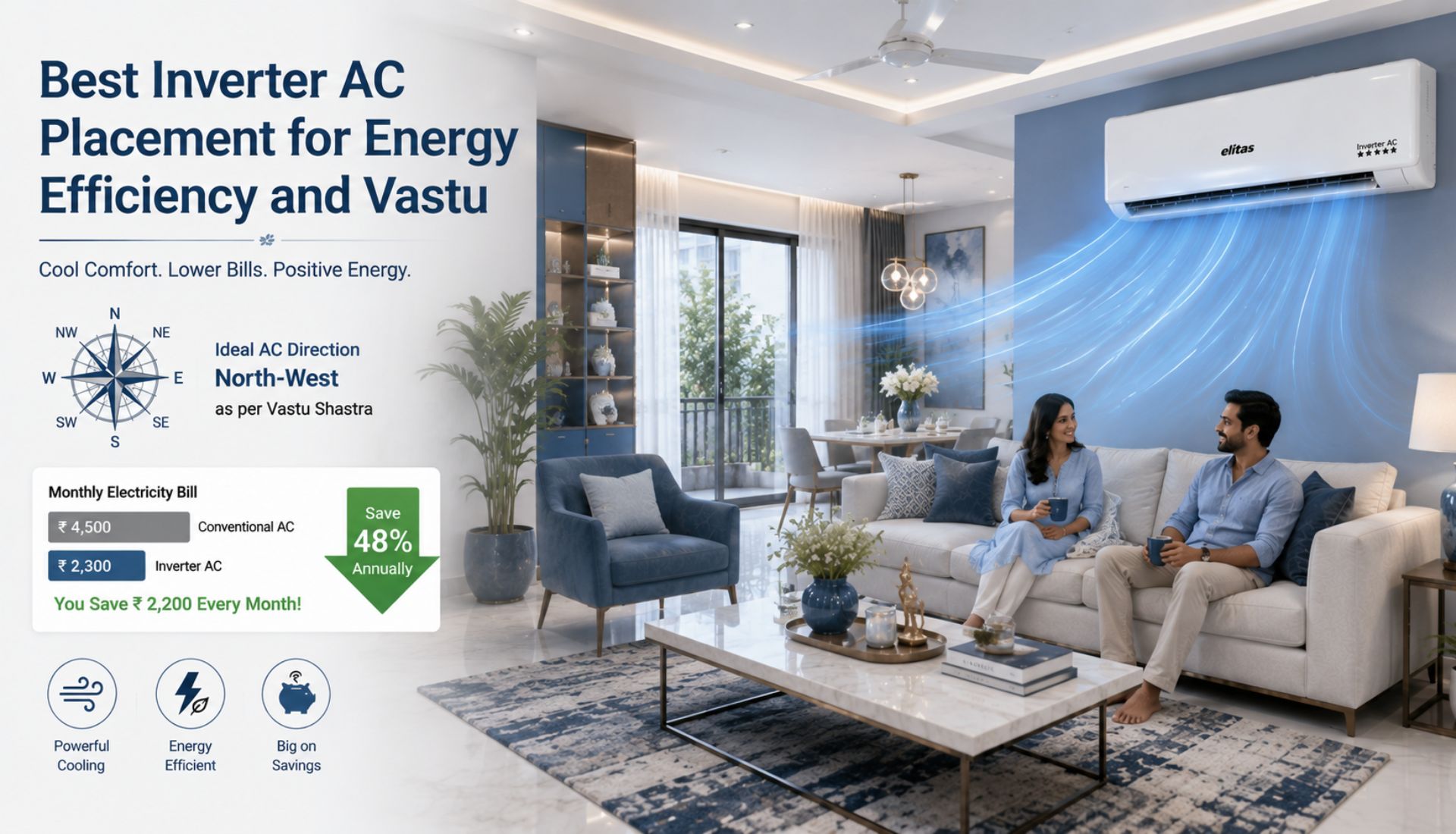
 Inverter air conditioners have become one of the most popular cooling solutions for Indian homes because they provide consistent cooling while using electricity more efficiently than many conventional fixed-speed models. However, even the best inverter AC may not perform at its full potential if it is installed in the wrong location.
The position of both the indoor and outdoor units affects airflow, cooling efficiency, compressor performance, and overall electricity consumption. Many homeowners also prefer to consider Vastu Shastra when deciding where to install an air conditioner. According to traditional Vastu principles, the direction of electrical appliances may contribute to a harmonious home environment, although these recommendations are based on cultural beliefs rather than scientific evidence.
In this guide, we’ll explain how to choose the best placement for an inverter AC, reduce electricity bills, and combine practical installation advice with commonly followed Vastu recommendations.
At Elitas Appliances, we offer innovative cooling solutions, including our Vastu Series Air Conditioners, designed to provide efficient cooling while supporting Vastu-conscious home planning.
Why Inverter AC Placement Matters
An inverter air conditioner automatically adjusts compressor speed according to the room’s cooling requirement. This technology helps maintain a consistent temperature while reducing unnecessary power consumption.
However, incorrect installation can reduce these benefits. If airflow is blocked or the outdoor unit cannot release heat efficiently, the inverter compressor may work harder than necessary, increasing electricity consumption and reducing long-term efficiency.
Correct placement helps achieve:
- Faster cooling
- Lower electricity bills
- Even airflow throughout the room
- Improved indoor comfort
- Longer compressor life
- Reduced maintenance costs
- Quieter operation
Best Indoor Unit Placement for Maximum Energy Efficiency
Install the Unit at the Correct Height
The indoor unit should generally be installed about 7–8 feet above the floor. This height allows cool air to circulate effectively across the room without creating uncomfortable drafts.
If the unit is installed too close to the ceiling or too low on the wall, airflow may become uneven and cooling performance may decrease.
Choose a Wall with Good Air Distribution
Select a wall that allows cool air to flow freely across the room. Avoid placing the indoor unit behind curtains, tall furniture, shelves, or decorative panels that can block airflow.
Proper air circulation helps the inverter compressor reach the desired temperature more quickly, reducing energy consumption.
Avoid Direct Sunlight
If possible, avoid installing the indoor unit where it receives direct sunlight through windows or skylights. Excess heat around the unit can affect temperature sensing and increase cooling demand.
Using curtains or blinds during the hottest part of the day can also help improve cooling efficiency.
Best Outdoor Unit Placement
The outdoor condenser unit releases the heat removed from your home. Efficient heat dissipation is essential for inverter technology to perform well.
For the best results, the outdoor unit should:
- Have adequate ventilation.
- Be installed on a stable platform or wall bracket.
- Remain easily accessible for servicing.
- Have sufficient clearance around all sides.
- Be protected from excessive dust and debris.
- Avoid enclosed spaces that trap heat.
Following the manufacturer’s installation recommendations ensures optimal cooling performance and can help reduce electricity usage.
Best Inverter AC Placement According to Vastu
Many homeowners like to combine modern technology with traditional Vastu planning. While Vastu principles are based on cultural beliefs rather than scientific evidence, they continue to influence home design across India.
Commonly followed Vastu recommendations include:
- Install the indoor unit on the South-East wall where practical.
- The North-West wall is another commonly preferred option.
- Avoid placing heavy electrical appliances in the North-East corner when possible.
- Ensure airflow spreads evenly throughout the room instead of directly onto occupants.
These recommendations should be considered alongside practical installation requirements such as ventilation, room layout, safety, and the manufacturer’s guidelines.
Can Energy Efficiency and Vastu Work Together?
Yes. Many homeowners successfully combine professional installation practices with Vastu-conscious planning. Choosing the right AC capacity, ensuring unobstructed airflow, and selecting a suitable installation location can improve both cooling performance and overall comfort while respecting traditional preferences.
By balancing modern engineering with thoughtful home planning, you can enjoy efficient cooling, lower electricity bills, and a comfortable indoor environment.
Common Inverter AC Placement Mistakes to Avoid
Even though inverter air conditioners are designed to save electricity, poor installation can reduce their efficiency. Avoiding common placement mistakes helps you get better cooling, lower electricity bills, and a longer system lifespan.
Here are some mistakes homeowners should avoid:
- Installing the indoor unit directly above a bed or sofa. Continuous cold air blowing onto people can reduce comfort.
- Blocking airflow with furniture or curtains. Restricted airflow makes the inverter compressor work harder.
- Installing the outdoor unit in a closed balcony or enclosed space. Poor ventilation prevents heat from escaping efficiently.
- Ignoring the recommended installation height. Installing the indoor unit too high or too low affects airflow distribution.
- Using excessively long refrigerant piping. Longer pipe runs can reduce system efficiency if they exceed the manufacturer’s recommendations.
- Installing the outdoor unit where it receives excessive direct sunlight without adequate airflow. High surrounding temperatures can reduce cooling efficiency.
- Skipping professional installation. Incorrect electrical connections or poor drainage may lead to performance issues and additional maintenance costs.
Professional installation according to the manufacturer’s instructions is one of the most effective ways to maximize the energy-saving benefits of an inverter AC.
Simple Tips to Maximize Energy Efficiency
In addition to proper placement, following a few simple habits can further reduce electricity consumption and improve cooling performance.
- Set the thermostat between 24°C and 26°C for an efficient balance between comfort and energy savings.
- Clean indoor air filters every two to four weeks during heavy use.
- Keep doors and windows closed while the AC is operating.
- Use curtains or blinds to reduce heat gain from direct sunlight.
- Run ceiling fans to improve cool air circulation.
- Schedule professional servicing at least once every year.
- Keep the outdoor condenser clean and free from leaves, dust, and debris.
- Choose the correct AC capacity for your room size and cooling requirements.
These practices help the inverter compressor operate more efficiently, reducing unnecessary energy consumption.
Choosing the Right Inverter AC Capacity
Even the best installation cannot compensate for an incorrectly sized air conditioner. Selecting the right capacity is essential for both comfort and energy efficiency.
| Room Size | Recommended Inverter AC Capacity* |
|---|---|
| Up to 180 sq. ft. | 1.5 Ton |
| 180–300 sq. ft. | 2 Ton |
| Above 300 sq. ft. | Multiple indoor units or a higher-capacity system |
*The ideal capacity depends on factors such as ceiling height, insulation, number of occupants, window area, and local climate. Always consult a qualified AC professional before purchasing.
Why Choose the Elitas Vastu Series Air Conditioner?
At Elitas Appliances, we understand that today’s homeowners want advanced technology, lower electricity bills, and thoughtful home planning. Our Elitas Vastu Series Air Conditioners are designed to combine efficient cooling with installation options that support Vastu-conscious preferences.
Key features include:
- Energy-efficient inverter technology.
- Reliable cooling performance for Indian weather conditions.
- Elegant, modern designs that complement contemporary interiors.
- Suitable for Vastu-conscious home planning.
- Designed for long-term comfort and dependable operation.
Browse our complete range of premium air conditioners:
https://elitasappliances.com/air-conditioners
Explore the Elitas Vastu Series:
Benefits of Correct Inverter AC Placement
Installing your inverter AC in the right location provides several long-term benefits:
- Lower electricity consumption.
- More uniform cooling throughout the room.
- Reduced compressor workload.
- Faster cooling during hot weather.
- Longer equipment lifespan.
- Quieter operation.
- Lower maintenance costs.
- Improved indoor comfort for the entire family.
When combined with regular maintenance and proper usage habits, correct installation helps homeowners get the maximum value from their inverter air conditioner.
Conclusion
Choosing the best placement for an inverter air conditioner is just as important as selecting the right model. Proper installation of both the indoor and outdoor units improves airflow, enhances cooling efficiency, and helps reduce electricity consumption over time.
For homeowners who follow Vastu Shastra, traditional placement recommendations can be incorporated into the installation plan while ensuring the system also meets the manufacturer’s technical requirements. Since Vastu guidance is based on traditional beliefs rather than scientific evidence, it should complement practical installation and energy-efficiency best practices.
If you are looking for a premium cooling solution that combines advanced inverter technology with Vastu-conscious planning, explore the Elitas Vastu Series Air Conditioners. They are designed to deliver dependable cooling, modern style, and energy-efficient performance for Indian homes.
Ready to Upgrade Your Home Cooling?
Visit Elitas Appliances today to discover our latest range of inverter air conditioners and learn how the Elitas Vastu Series can help you enjoy efficient cooling, lower electricity bills, and a thoughtfully designed living space.
Frequently Asked Questions (SEO Optimized)
1. Where is the best place to install an inverter AC?
The best place is on a wall that allows cool air to circulate evenly throughout the room without obstruction. The indoor unit is generally installed about 7–8 feet above the floor, while the outdoor unit should have sufficient ventilation and service clearance.
2. Does inverter AC placement affect electricity consumption?
Yes. Poor placement can block airflow, reduce cooling efficiency, and force the compressor to work harder, leading to higher electricity consumption.
3. Which direction is considered best for inverter AC according to Vastu?
According to traditional Vastu Shastra, the South-East is commonly preferred for electrical appliances, including air conditioners. The North-West is another direction many homeowners consider. These recommendations are based on traditional beliefs rather than scientific evidence.
4. Can I install an inverter AC above my bed?
It is generally better to avoid installing the indoor unit directly above a bed because continuous cold airflow may reduce comfort. Position the unit so air is distributed evenly across the room instead.
5. Does the outdoor unit need direct sunlight?
No. Excessive heat around the outdoor condenser can reduce efficiency. It is better to provide shade without blocking airflow or ventilation.
6. What temperature saves the most electricity?
A thermostat setting between 24°C and 26°C is widely recommended for balancing comfort and energy efficiency.
7. Does room size affect inverter AC performance?
Yes. Choosing the correct AC capacity based on room size, insulation, ceiling height, occupancy, and window area is essential for efficient cooling and lower electricity bills.
8. How often should an inverter AC be serviced?
Professional servicing is recommended at least once a year, while indoor filters should be cleaned regularly, especially during periods of frequent use.
9. Is professional installation important?
Absolutely. Correct installation helps ensure proper refrigerant flow, electrical safety, drainage, airflow, and energy-efficient operation.
10. Why choose the Elitas Vastu Series Air Conditioner?
The Elitas Vastu Series Air Conditioner combines advanced inverter technology with installation options that support Vastu-conscious home planning, delivering efficient cooling, modern design, and dependable performance for Indian homes.